Mountlake Terrace is mid-century houses on city lots, with newer buildings near the transit line. The slopes are gentle, the soils are compacted, and the yards were not designed for the amount of roof water a remodels-worth of downspouts can dump. The thin spots are usually the path the dog takes and the corner that stays wet. Seed on top of those, without opening the soil, disappears.
Snohomish County · ZIP 98043 · 2020 population 21,272
Overseeding worn city grass
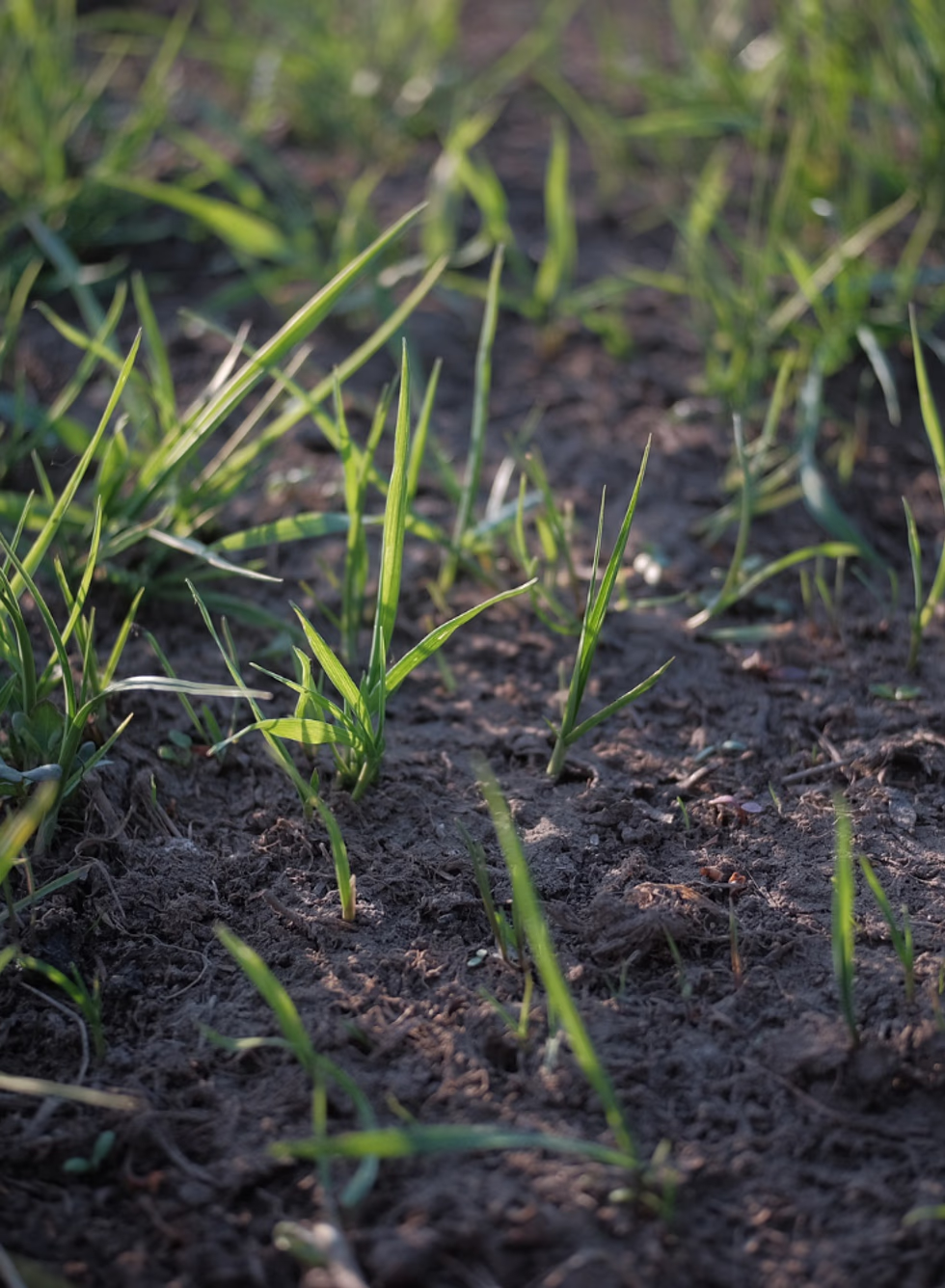
We slit seed or we seed into cores. Broadcast seed on a hard little lawn blows to the fence. The mix is wear-tolerant rye with fescue, because these yards get walked on. Shade from the neighbor’s fir gets the fescue; the parking-strip sun can take rye.
Keep off it for two weeks if you can. On a small lot that is awkward, so we tell you which strip actually matters. Mow when the new grass reaches about three inches, and do not bag the first cut so short you pull the seedlings.
The ground in Mountlake Terrace
Lots are modest. A patio, a small lawn, a side yard that has become a moss strip, and a fence that is older than the owners. That is the usual visit. The soil has been walked on for sixty years. Aeration and dethatching change the lawn more than a bag of seed thrown on top.
Where the lot tips, it tips a little, and a low wall or a re-graded swale is enough. We are not cutting roads into a mountain. Pavers get people off the mud by the back door, and a pressure wash takes the black film off a walk that has not seen sun all winter. Plantings should stay in scale with the house. A hedgerow that needs a lift every year is the wrong tree for a forty-foot lot.
How we do the work
Seed fails here for three boring reasons: it lands on moss, it lands in the dry week of July, or it is a variety that wants a Midwest summer. We use mixes that can take cool, wet winters and our weak sun. The ground is opened first, by dethatching or cores, or the seed is just decoration.
Hydroseed makes sense on a bare area big enough to justify the tank, especially a cleared bench or a new grade. A small backyard is hand seeded or slit seeded. We say which one when we see the square footage, not from the truck.
What we look at first
- Bare soil versus a mat the seed cannot touch
- Sun hours, because no mix grows under a solid canopy
- How the water leaves the area
- Whether hydroseed or a slit seeder fits the gate and the size
Water for the first two weeks
Rain usually does it in September. If it does not, the surface needs to stay damp, not flooded. Once the grass is up, we stretch the watering out. A seedling that is misted forever never roots.
When to mow new grass
At about three inches, with a sharp blade, and not shorter than two. The first mows are slow. Turning the mower on a dime on day ten pulls the seedlings out in a clump.
Hydroseed, plainly
A slurry of seed, mulch, and tackifier, sprayed on bare soil. It holds on gentle grades better than dry seed. It still fails on a vertical bank, on moss, and on ground that is underwater. We look at those before we book the tank.
More from this crew
- Lawn seeding across Snohomish County
- Lawn aeration in Mountlake Terrace
- Sod installation in Mountlake Terrace
- Lawn dethatching in Mountlake Terrace
- Lawn fertilization in Mountlake Terrace
- Lawn seeding in Lynnwood
- Lawn seeding in Edmonds
- Lawn seeding in Brier
Sources for the climate and the water
- USDA plant hardiness map for choosing plants that can take a Snohomish County winter.
- EPA WaterSense on watering less once a lawn or a new planting is established.
- EPA Soak Up the Rain on keeping roof and yard water from becoming someone else’s problem.