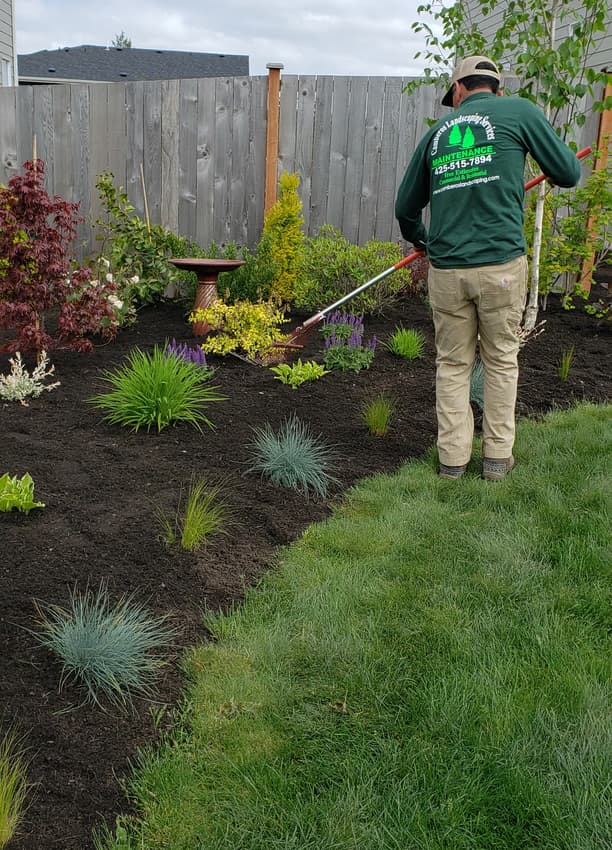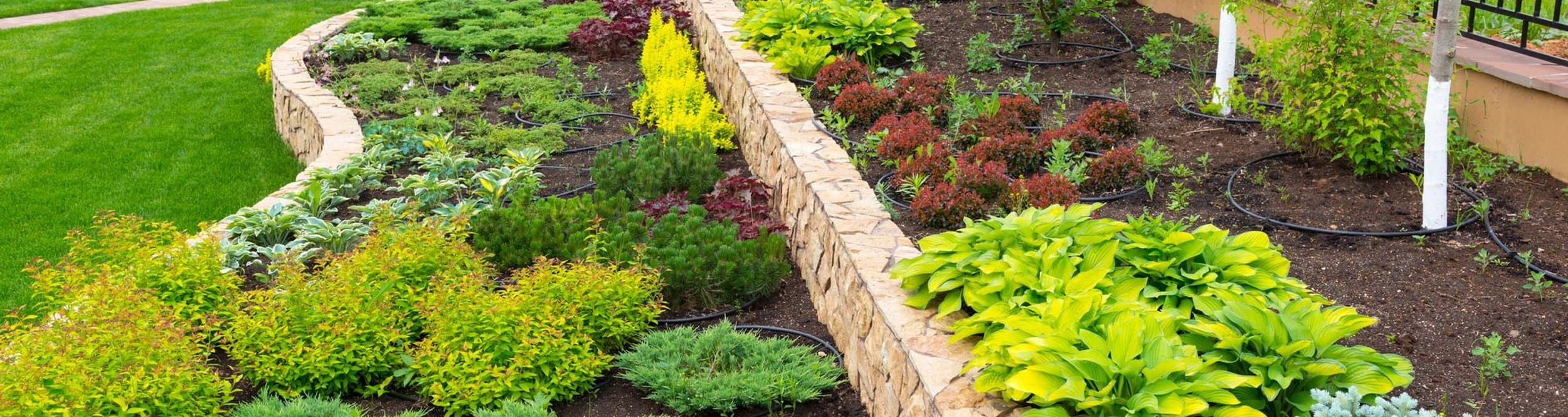
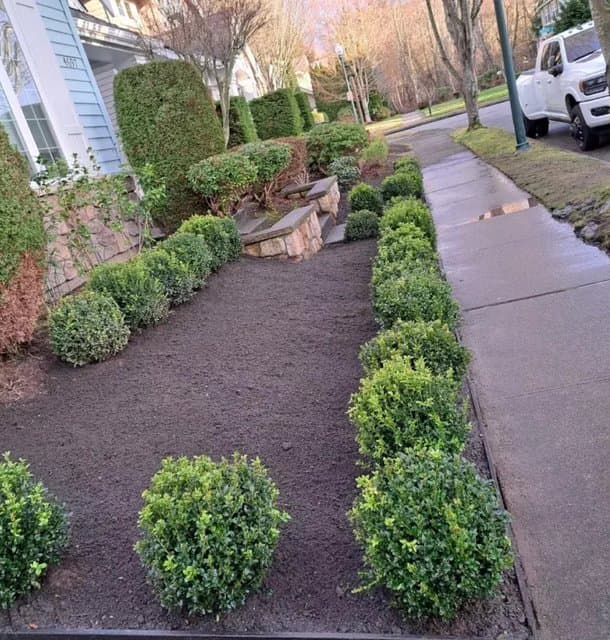
Mill Creek was laid out as a planned city: curving streets, townhome slopes, golf-course edges, and lawns that were meant to look trimmed from the day the house sold. The soils are the soils of a graded subdivision, and the rain is the same county rain that finds every low corner. These yards are shrubs more than forest. The failure is shearing everything into the same ball, including the plants that flower on old wood.
Snohomish County · ZIP 98012 · 2020 population 20,799
Hedges and the small ornamental trees
We identify what should be sheared and what should be pruned. Laurel hedges get a taper so the bottom stays leafy. The Japanese maple by the front door gets a light structural prune, not a buzz. Timing follows the plant.
A row that was let go for five years cannot become a tight hedge in one visit without looking butchered. We stage it. One hard cut and a follow-up beats a single desperate shearing.
The ground in Mill Creek
The expectation here is a clean edge. Lawns get mowed on a schedule, aerated before they mat down, and fertilized lightly enough that we are not just feeding the moss. Townhome and hillside lots need low walls and tight paver work more than they need a big landscape renovation. Bark beds are there to keep the mulch line straight and the weeds out of the front that faces the street.
We still find the same drainage mistakes as everywhere else: downspouts tied to nothing, and patios pitched back at the siding. The difference is that a small failure shows, because the rest of the street is kept. Native shrubs fit the greenbelts behind the houses. A tropical plant list does not survive the first wet winter, and it will not match the neighborhood even if it did.
How we do the work
We thin, we raise, and we take out dead wood. We do not top a tree. Topping makes a bigger, weaker tree and a yearly invoice. If a tree is the wrong tree for the spot, the honest options are prune it correctly or remove it, and we will say which.
Shrubs get pruned at the right time for the plant. A spring-flowering shrub cut to balls in March is a shrub with no flowers. Hedges that are meant to be hedges get sheared. Everything else gets pruned back to a bud or a branch, not buzzed into a cube.
What we look at first
- Dead, crossing, and broken wood
- Clearance over the roof, the walk, and the drive
- Whether the tree is too close to the house to ever be right
- What the shrub is, so we do not cut off the flower buds
What we will not climb
A tree we cannot tie into safely, a tree into the power lines, a huge removal over a glass house. We would rather walk away than do a dangerous job from the wrong ladder. We will tell you who the job is for.
Cleanup
Brush hauled, sawdust blown off the walk, large wood bucked if we agreed to leave firewood. We do not leave a knee-high layer of twigs in the beds and call the prune done.
When we cut
Deadwood anytime. Spring bloomers after they flower. Fruit trees in the dormant season. Hedges when they are growing so they can heal the shear. A single “prune everything in March” visit is how flowering shrubs get ruined.
More from this crew
- Tree and shrub pruning across Snohomish County
- Yard cleanup in Mill Creek
- Landscaping in Mill Creek
- Beauty bark in Mill Creek
- Landscape design in Mill Creek
- Tree and shrub pruning in Bothell
- Tree and shrub pruning in Lynnwood
- Tree and shrub pruning in Everett
Sources for the climate and the water
- USDA plant hardiness map for choosing plants that can take a Snohomish County winter.
- EPA WaterSense on watering less once a lawn or a new planting is established.
- EPA Soak Up the Rain on keeping roof and yard water from becoming someone else’s problem.