Mill Creek was laid out as a planned city: curving streets, townhome slopes, golf-course edges, and lawns that were meant to look trimmed from the day the house sold. The soils are the soils of a graded subdivision, and the rain is the same county rain that finds every low corner. These beds are a line you see from the road. Bark that is thin, dyed a wild color, or spilled into the lawn reads as unfinished.
Snohomish County · ZIP 98012 · 2020 population 20,799
The street-facing bed
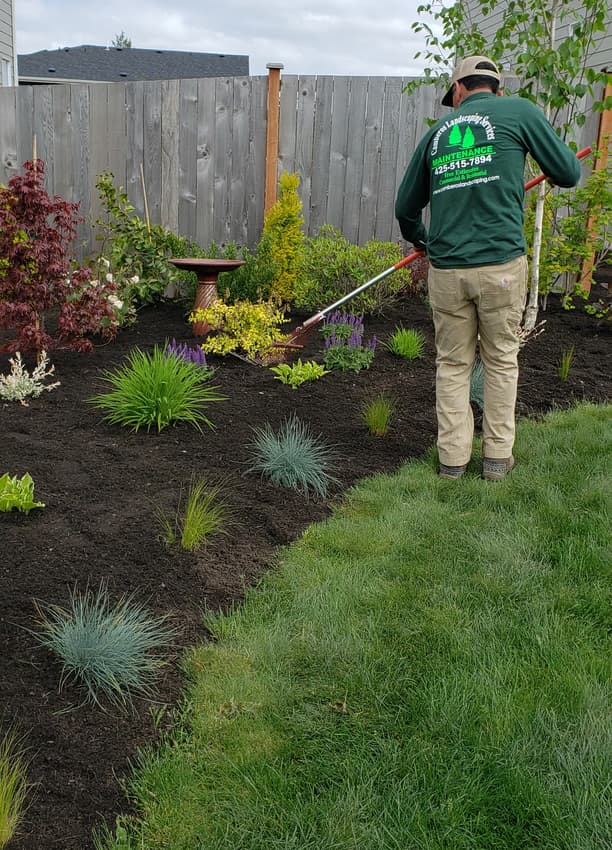
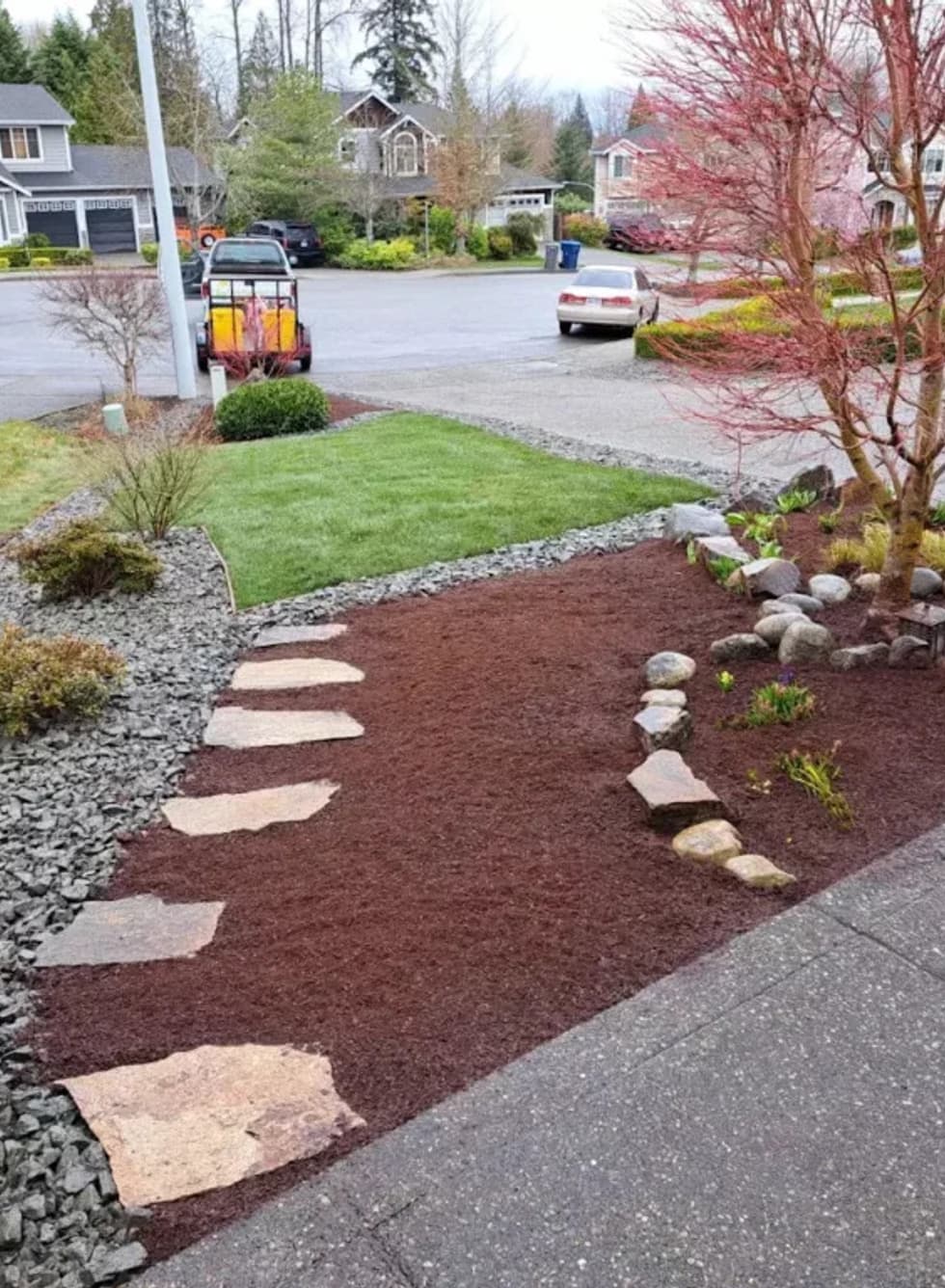
We cut the edge, pull the grass that has crept in, and fill to a consistent depth. One color, the natural cedar or hemlock grade we can stand behind, not a neon. Irrigation heads are left proud of the mulch so you are not watering a wet blanket and wondering why the shrub died.
An annual top-up keeps the line. We can put that on a schedule. The first visit is the one where we fix the edge.
The ground in Mill Creek
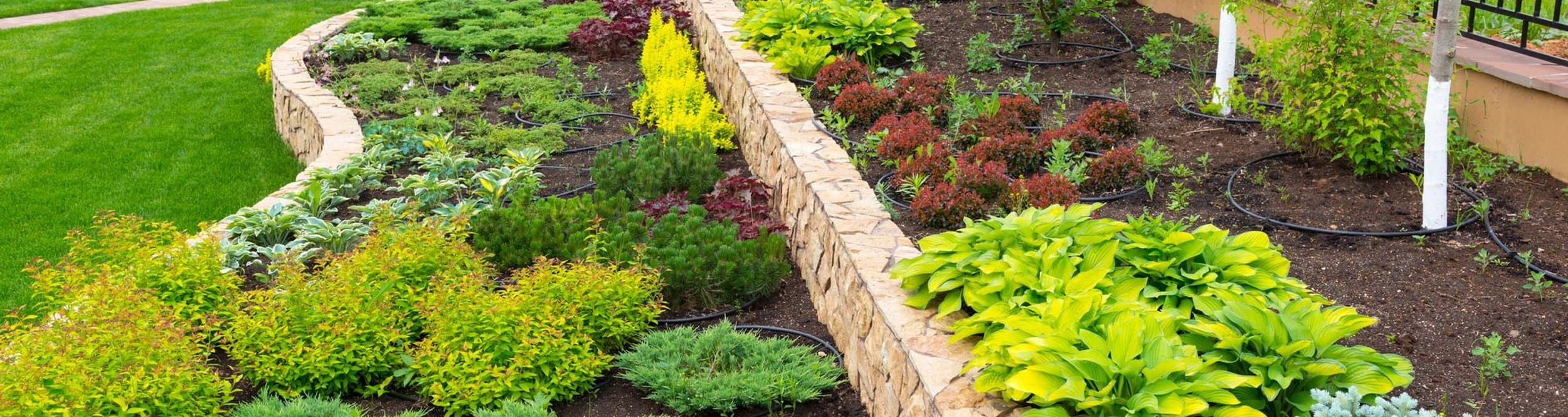
The expectation here is a clean edge. Lawns get mowed on a schedule, aerated before they mat down, and fertilized lightly enough that we are not just feeding the moss. Townhome and hillside lots need low walls and tight paver work more than they need a big landscape renovation. Bark beds are there to keep the mulch line straight and the weeds out of the front that faces the street.
We still find the same drainage mistakes as everywhere else: downspouts tied to nothing, and patios pitched back at the siding. The difference is that a small failure shows, because the rest of the street is kept. Native shrubs fit the greenbelts behind the houses. A tropical plant list does not survive the first wet winter, and it will not match the neighborhood even if it did.
How we do the work
Bark is a blanket, not a cleanup. We pull the weeds and the old matted layer that has turned into soil, edge the bed so the bark has a place to stop, and put down enough depth to block light. A sprinkle that still shows dirt is not a bark job. It is a way to pay for the same weeds in June.
We keep bark off the crowns of shrubs and off the trunks of trees. A volcano of mulch against the bark of a tree is how the trunk rots. Two to three inches across the soil, pulled back at the stems.
What we look at first
- Whether the old bark has composted into a weed bed
- The edge against the lawn
- Plants that are buried already
- How far the truck can get the load
How often
Top up every year or two, an inch or so, once the first depth is right. Starting over every spring means the first job was thin or the bed was never weeded. We would rather be on a light top-up.
Color
Natural bark fades to gray. That is normal. Dyed product holds a color and also stains concrete when it is fresh. We tell you which load you are getting. We do not promise the color in the photo will survive a winter.
Old fabric
Landscape fabric under bark is where weeds root in the dust on top, and where water sheets off. When we find it, we take it out if the bed is weedy. We do not sell a new layer of it.
More from this crew
- Beauty bark across Snohomish County
- Lawn weed control in Mill Creek
- Yard cleanup in Mill Creek
- Landscape design in Mill Creek
- Tree and shrub pruning in Mill Creek
- Beauty bark in Bothell
- Beauty bark in Lynnwood
- Beauty bark in Everett
Sources for the climate and the water
- USDA plant hardiness map for choosing plants that can take a Snohomish County winter.
- EPA WaterSense on watering less once a lawn or a new planting is established.
- EPA Soak Up the Rain on keeping roof and yard water from becoming someone else’s problem.