Darrington sits up against the Cascades, with Whitehorse Mountain on the skyline and a harder rain than the towns down on the flats. Soils run rocky, lots break off into steep cuts, and water does not sheet across a lawn so much as it cuts a track and takes the soil with it. A foothill yard is a grading project that happens to include a patio. We price the dirt and the walls first.
Snohomish County · ZIP 98241 · 2020 population 1,358
Walls, steps, and one flat place
The sequence is hold the bank, intercept the water, then build the walk and the floor on what is now stable. Gravel paths do a lot of the connecting. Pavers are for the place you sit, where a gravel surface would end up in the house.
We do not import a suburban courtyard onto a lot that falls ten feet. The steps should feel like the hill, short and solid, not a single tall riser.
The ground in Darrington
This is a small town with mountain weather. A wall that would be decorative in Mill Creek is structural here: it is holding a bank that wants to move every winter. We see shallow, rocky ground, overhanging fir and hemlock, and driveways that wash out where the grade dumps onto the road.
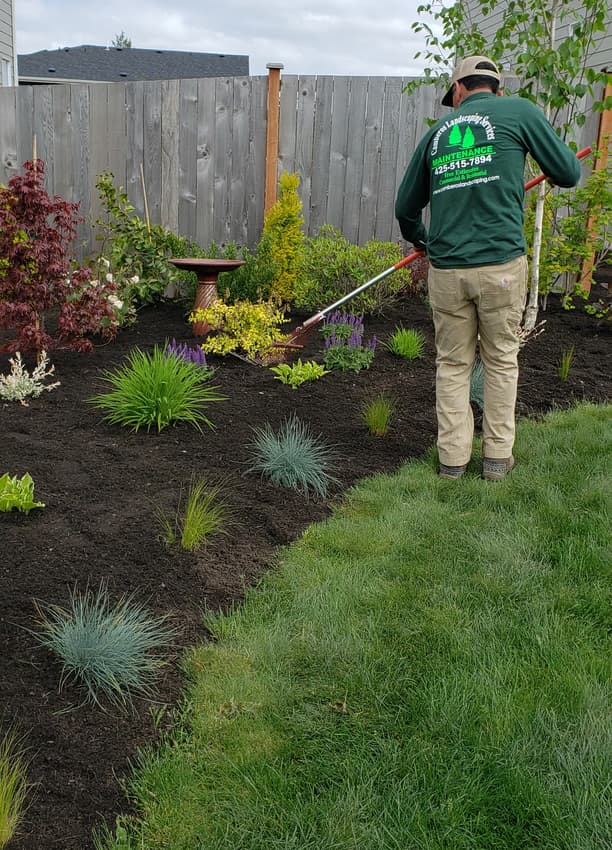
Planting lists shrink to what can handle cold, wet, and poor soil. Huckleberry and mountain hemlock already grow on the edges of these properties. A lawn is possible on the flatter bench of a lot, but it needs seed and soil that can take a short season, not a turf schedule copied from Everett. Cleanup is often about limbs over the roof and ditches that have filled with gravel from the bank above.
How we do the work
Hardscape is the permanent part of the yard: the floors you walk, the walls that hold soil, the steps between them. We design it around how water moves and how you move. A pretty patio with a stair that lands in the low spot is a collection of pieces, not a yard.
We would rather build less and have it drain than fill a lot with surfaces that all tip the wrong way. Materials stay limited. One stone, one wall type, so the place looks finished instead of like a showroom.
What we look at first
- The route from the door to the gate, the drive, and the part of the yard you use
- Every place water stands now
- Slopes that need a step or a wall before they need a plant
- What has to stay: trees, fences, the neighbor’s grade
One material, used honestly
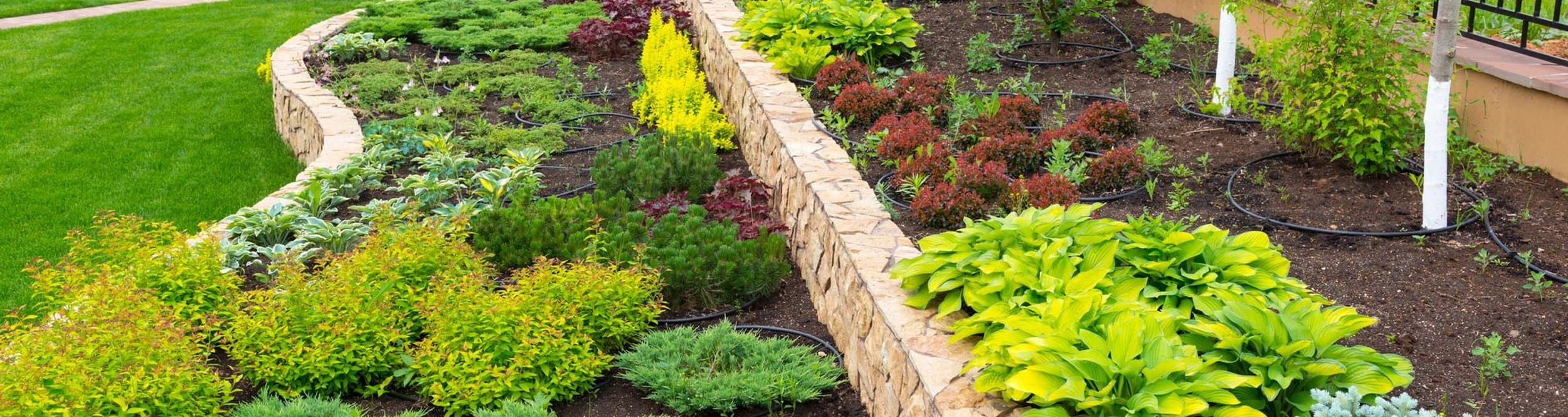
Pavers, a wall block or a rock, and gravel. That is usually enough. Mixing flagstone, brick, river rock, and a second paver line makes a small yard loud and gives water more joints to exploit.
Phasing
Drainage and walls first, floors second, plants last. Doing the plants first is how they get buried or trampled. If the budget is a phase, we stop at a stable, drained yard, not at a finished-looking corner that dumps water on the rest.
Steps
Even risers, a tread you can put a whole foot on, and a surface that is not slick when it is wet. Landscape steps are where people fall. We build them like we will use them in the dark, in January.
More from this crew
- Hardscaping across Snohomish County
- Paver installation in Darrington
- Patio installation in Darrington
- Retaining walls in Darrington
- Landscape design in Darrington
- Hardscaping in Granite Falls
- Hardscaping in Arlington
Sources for the climate and the water
- USDA plant hardiness map for choosing plants that can take a Snohomish County winter.
- EPA WaterSense on watering less once a lawn or a new planting is established.
- EPA Soak Up the Rain on keeping roof and yard water from becoming someone else’s problem.