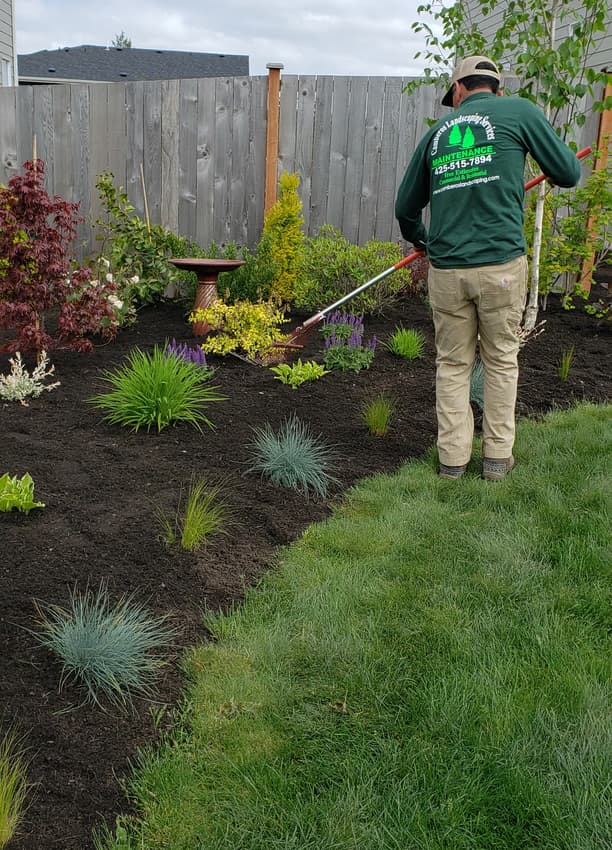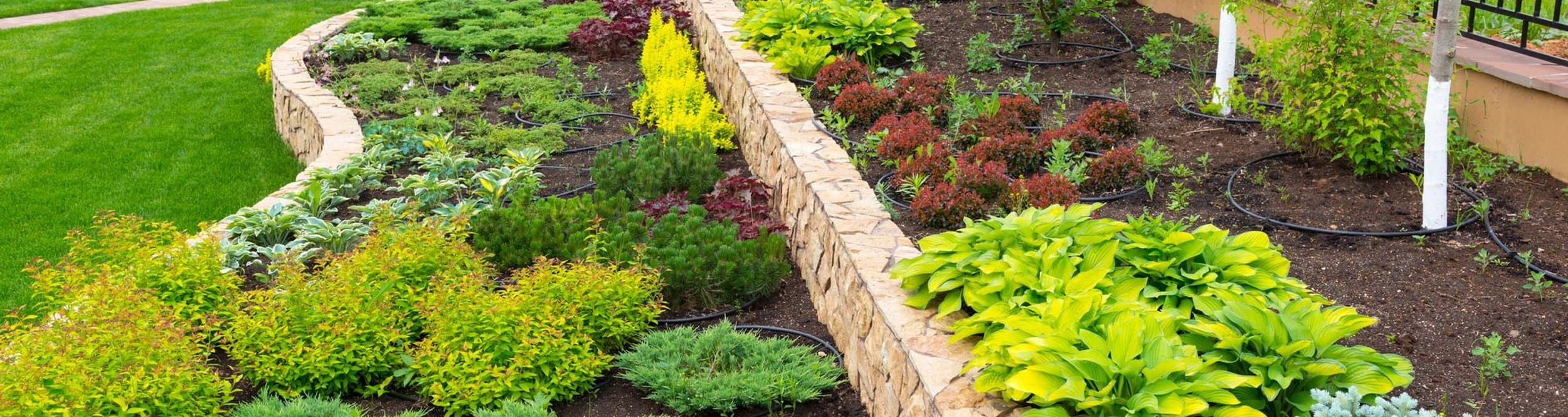
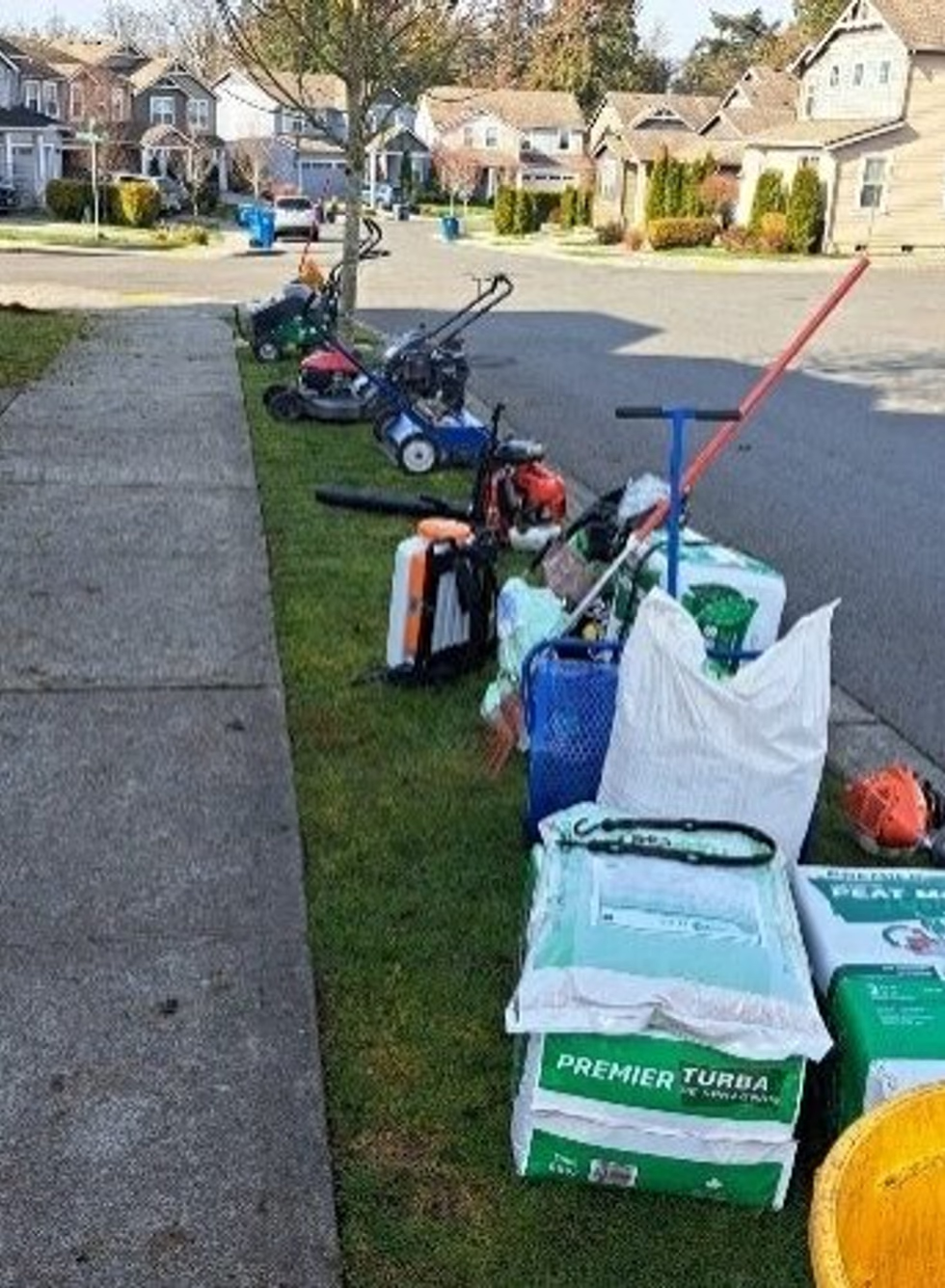
Mukilteo drops toward the ferry and the Sound. Salt reaches the lower streets, and the hills above the terminal shed water down through yards that were cut into the slope. A flat inland detail does not survive on these lots. Salt-burned edges do not need nitrogen. They need different plants. The sheltered lawn can take a normal fall feeding.
Snohomish County · ZIP 98275 · 2020 population 21,246
Feed the lawn, not the bluff
Wind and salt confuse the diagnosis. Yellow tips on the west side are often burn, not hunger. We look before we spread. Inland-facing turf gets a slow feed in the fall and lime if it is sour.
Nothing gets broadcast to the edge of a bank where the next rain carries it to the beach. We keep a clean margin.
The ground in Mukilteo
Hillside runoff is the job. A patio with a view is also a patio that can send water at the house if the base and the pitch are wrong. We build the drain before the pavers, and we hold the bank with a wall that has rock or drain tile behind it, not a decorative stack sitting on the sod.
Salt-tolerant natives belong on the exposed edges. Pressure washing is how you get the marine film off a walk and a railing; it comes back, so we treat it as upkeep. Lawns on the upper, slightly flatter streets behave more like the rest of the county — clay, moss, shade from big trees — and we maintain them that way. The waterfront lots are a different trade: erosion, wind, and a view you do not want to block with a hedge.
How we do the work
Most “hungry” lawns we see are wet, shady, or mowed to the dirt. Fertilizer on that lawn feeds the moss and burns the grass if the rate is hot. We fertilize after we know the lawn has light, drainage, and a thatch layer thin enough for the product to reach soil.
We use slow feed, not a cheap quick green that is gone in three weeks and yellow after. Lime when the soil is sour. We do not stack lime and a heavy nitrogen app on the same afternoon and hope.
If the lawn is mostly moss, we say so and we sell the dethatch instead of a bag. Food is the last step, not the first.
What we look at first
- Moss versus thin grass
- How short it has been cut
- Whether the lawn drains
- A soil read before we lime, not a guess
Moss products
Iron blacks the moss. It does not remove the shade or the water that grew it. We use it as a tool after the mat is managed, not as the whole plan. Dead moss still has to be raked out or you are looking at a black carpet.
What “green in a week” usually means
A fast soluble feed. It looks great, it fades, and it burns if the lawn was dry. We would rather you see a steady color over a month. If someone promised neon by Friday, ask what happens on the Friday after that.
Pets and kids
Keep them off until the product is watered in and the blades are dry. We use common lawn fertilizers, not a mystery mix, and we still do not treat them as something to play in while they are sitting on the leaf.
More from this crew
- Lawn fertilization across Snohomish County
- Lawn weed control in Mukilteo
- Lawn aeration in Mukilteo
- Lawn seeding in Mukilteo
- Lawn mowing in Mukilteo
- Lawn fertilization in Everett
- Lawn fertilization in Edmonds
- Lawn fertilization in Mill Creek
Sources for the climate and the water
- USDA plant hardiness map for choosing plants that can take a Snohomish County winter.
- EPA WaterSense on watering less once a lawn or a new planting is established.
- EPA Soak Up the Rain on keeping roof and yard water from becoming someone else’s problem.