Woodway is large, wooded lots and a town of 1,384 people. The canopy is the landscape. Lawns live in the gaps between old trees, the soil stays shaded and cool, and privacy is the reason people bought the property. Shade beds want bark. Shade lawns often want to become bark. We mulch the ground that has already quit as turf.
Snohomish County · ZIP 98020 · 2020 population 1,384
The right floor under trees
Under firs and maples we bark after the moss and the worst of the roots’ litter are dealt with. The depth hides the thin soil and keeps the mud off the house. We do not pile it against the trunk, and we do not smother the surface roots under half a foot. A few inches, refreshed, is the maintenance.
Ferns and salal can come through a normal layer. That is fine. The point is to stop the bittercress and the grass, not to sterilize the woods.
The ground in Woodway
We are not opening these lots to the street. Pruning is about structure, light, and keeping limbs off the house, done so the screen of trees stays. Under that canopy the lawn is the hard part: moss, thin grass, and roots at the surface. Aeration helps the pockets that get some sun. The deep shade wants a different floor — bark, ferns, and the understory that is already trying to grow — not another season of seed that germinates and dies.
Hardscape, when it belongs, is a terrace or a quiet patio in a clearing, built for wet shade so it does not turn green and slick. Bark on the beds keeps the mud down and the edges readable from the house. The work should look like it was always in the trees, because it is.
How we do the work
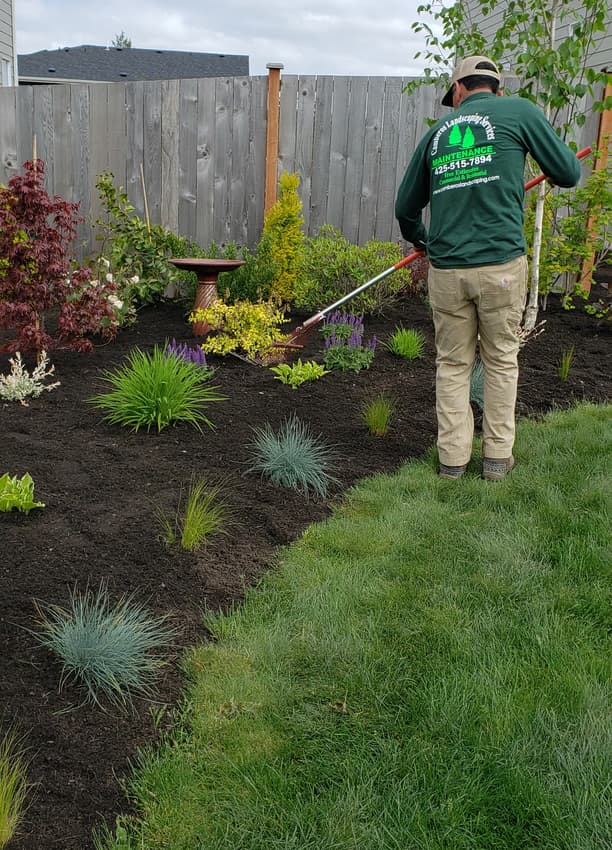
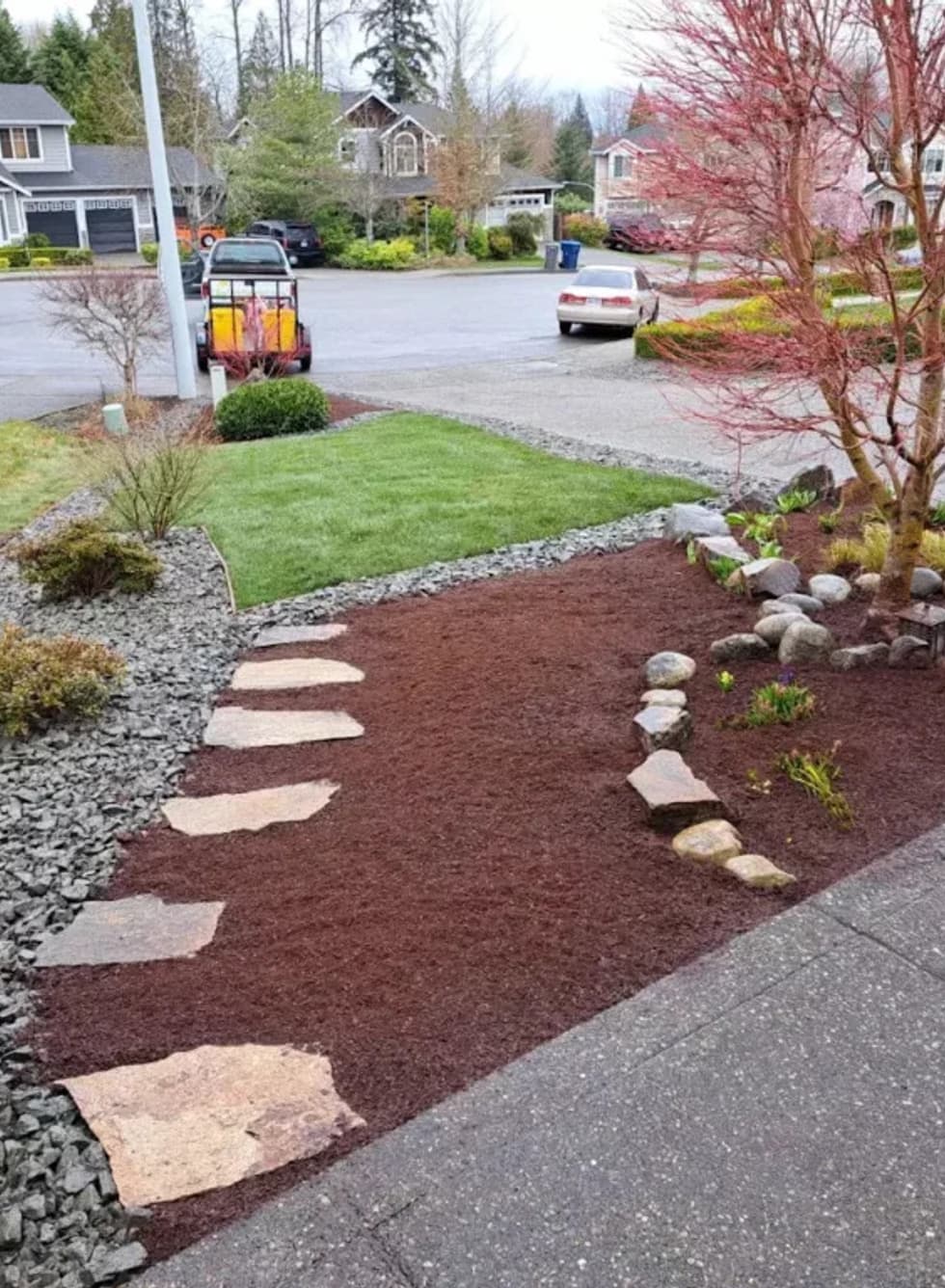
Bark is a blanket, not a cleanup. We pull the weeds and the old matted layer that has turned into soil, edge the bed so the bark has a place to stop, and put down enough depth to block light. A sprinkle that still shows dirt is not a bark job. It is a way to pay for the same weeds in June.
We keep bark off the crowns of shrubs and off the trunks of trees. A volcano of mulch against the bark of a tree is how the trunk rots. Two to three inches across the soil, pulled back at the stems.
What we look at first
- Whether the old bark has composted into a weed bed
- The edge against the lawn
- Plants that are buried already
- How far the truck can get the load
Depth
About three inches after it settles, less against the stems, none against the trunk. One inch looks like a lot in the wheelbarrow and does nothing by July. We would rather do a smaller bed correctly.
How often
Top up every year or two, an inch or so, once the first depth is right. Starting over every spring means the first job was thin or the bed was never weeded. We would rather be on a light top-up.
Old fabric
Landscape fabric under bark is where weeds root in the dust on top, and where water sheets off. When we find it, we take it out if the bed is weedy. We do not sell a new layer of it.
More from this crew
- Beauty bark across Snohomish County
- Lawn weed control in Woodway
- Yard cleanup in Woodway
- Landscape design in Woodway
- Tree and shrub pruning in Woodway
- Beauty bark in Edmonds
- Beauty bark in Mukilteo
Sources for the climate and the water
- USDA plant hardiness map for choosing plants that can take a Snohomish County winter.
- EPA WaterSense on watering less once a lawn or a new planting is established.
- EPA Soak Up the Rain on keeping roof and yard water from becoming someone else’s problem.