Edmonds faces the Sound. Salt air reaches the patios, the wind comes off the water, and the soils change as you move up off the beach — sandier near the shore, heavier as the hills rise toward the ferry and the bowl downtown. Exposed beds lose light bark to the first gale. We use a chunkier grade where the wind hits, and we do not mulch the face of a bluff.
Snohomish County · ZIP 98020 · 2020 population 42,690
Hold the mulch out of the wind
Sheltered beds around the house take a normal bark job: weed, edge, three inches, off the trunks. The west edge gets a heavier mulch or a groundcover, because a fine bark becomes litter on the neighbor’s walk.
Salt does not care about the color of the load. We are not dying the bed to match a picture. We are covering soil.
The ground in Edmonds
A yard with a view of the water is also a yard in the wind. Screens and plantings have to stand up to salt and to gusts that shred a soft shrub in one winter. Madrone, shore pine, and kinnikinnick already grow on these bluffs for a reason. We use that palette when a client wants the bank to stay put without a weekly watering schedule.
Lower down, salt film builds on pavers and railings, and a pressure-wash is maintenance, not a one-time event. Retaining work on the west-facing slopes is about holding a sandy bank, with drainage behind the wall so the hill does not load up and shove. The older neighborhoods up the hill have more conventional clay and bigger trees, so we do not treat every Edmonds lot like a beach cottage.
How we do the work
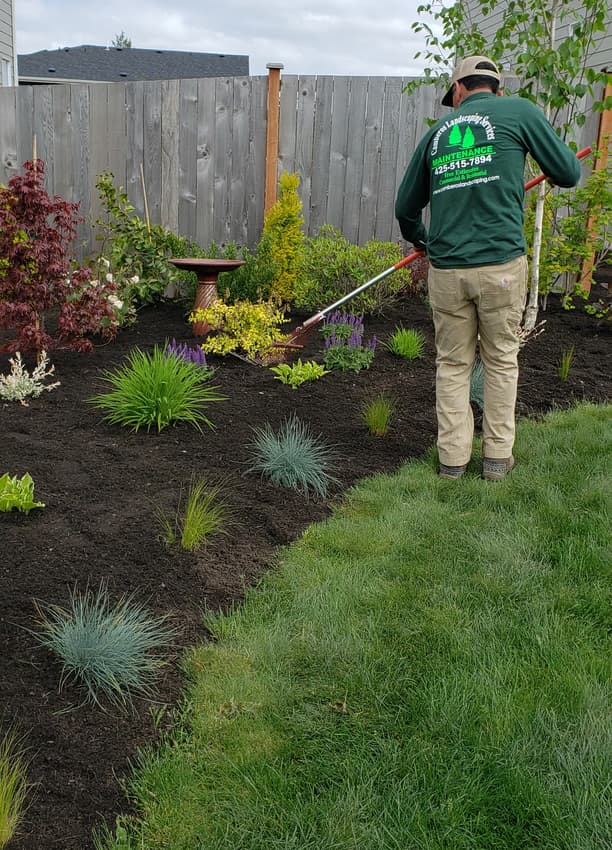
Bark is a blanket, not a cleanup. We pull the weeds and the old matted layer that has turned into soil, edge the bed so the bark has a place to stop, and put down enough depth to block light. A sprinkle that still shows dirt is not a bark job. It is a way to pay for the same weeds in June.
We keep bark off the crowns of shrubs and off the trunks of trees. A volcano of mulch against the bark of a tree is how the trunk rots. Two to three inches across the soil, pulled back at the stems.
What we look at first
- Whether the old bark has composted into a weed bed
- The edge against the lawn
- Plants that are buried already
- How far the truck can get the load
Depth
About three inches after it settles, less against the stems, none against the trunk. One inch looks like a lot in the wheelbarrow and does nothing by July. We would rather do a smaller bed correctly.
Color
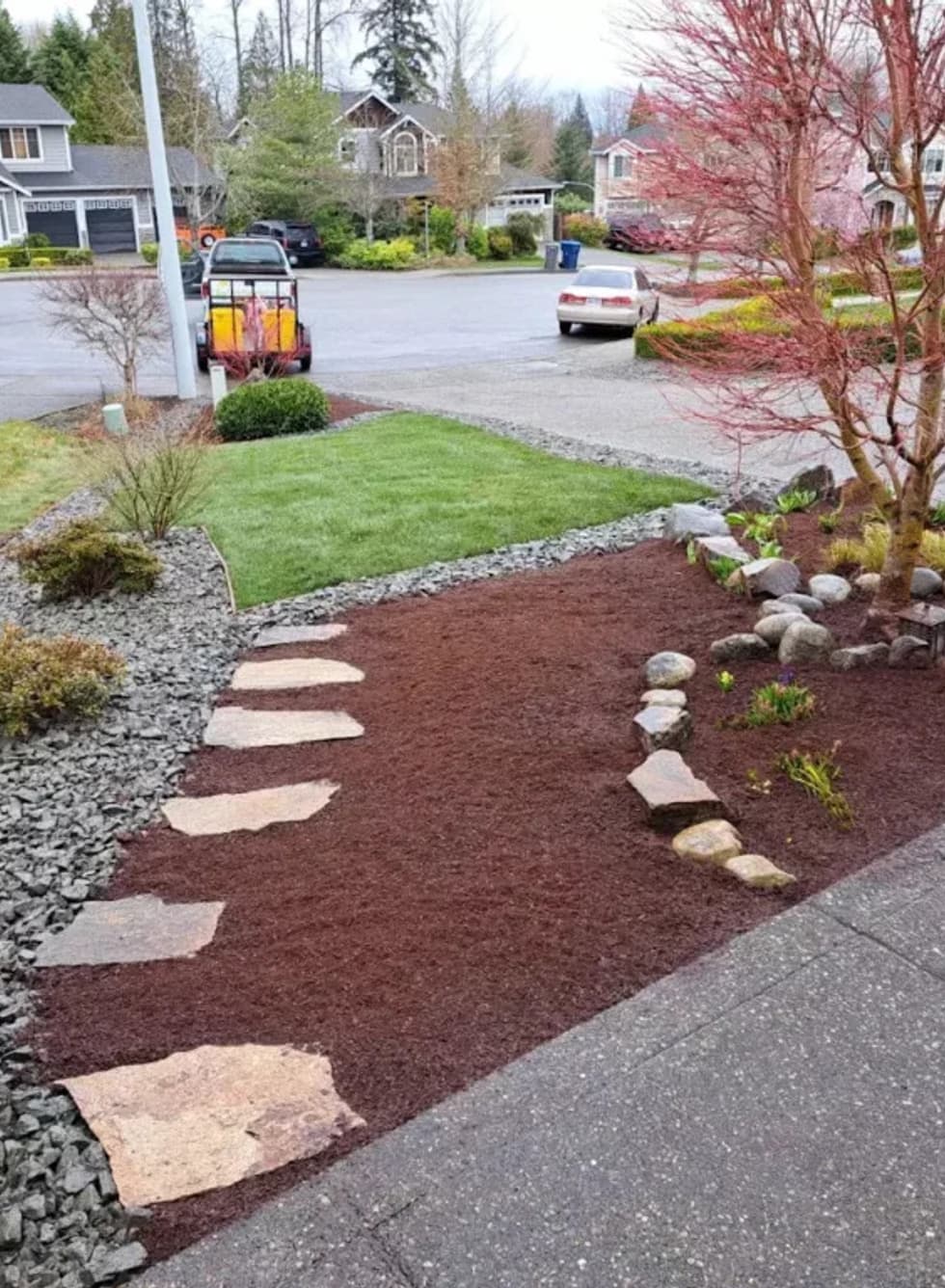
Natural bark fades to gray. That is normal. Dyed product holds a color and also stains concrete when it is fresh. We tell you which load you are getting. We do not promise the color in the photo will survive a winter.
Old fabric
Landscape fabric under bark is where weeds root in the dust on top, and where water sheets off. When we find it, we take it out if the bed is weedy. We do not sell a new layer of it.
More from this crew
- Beauty bark across Snohomish County
- Lawn weed control in Edmonds
- Yard cleanup in Edmonds
- Landscape design in Edmonds
- Tree and shrub pruning in Edmonds
- Beauty bark in Mukilteo
- Beauty bark in Lynnwood
- Beauty bark in Woodway
Sources for the climate and the water
- USDA plant hardiness map for choosing plants that can take a Snohomish County winter.
- EPA WaterSense on watering less once a lawn or a new planting is established.
- EPA Soak Up the Rain on keeping roof and yard water from becoming someone else’s problem.