Mountlake Terrace is mid-century houses on city lots, with newer buildings near the transit line. The slopes are gentle, the soils are compacted, and the yards were not designed for the amount of roof water a remodels-worth of downspouts can dump. City beds are narrow, and a sloppy bark job ends up on the sidewalk. We edge, we fill, and we blow the walk before we leave.
Snohomish County · ZIP 98043 · 2020 population 21,272
A clean edge on a small bed
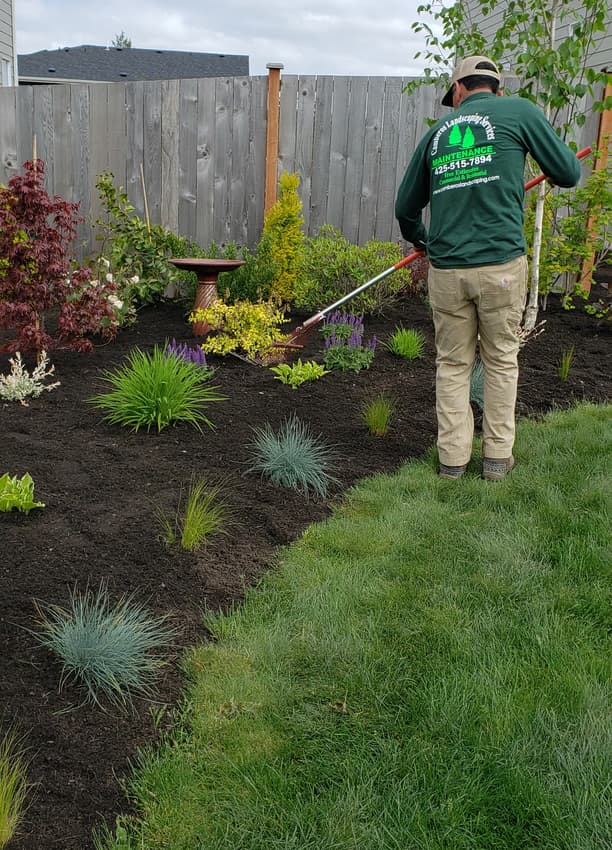
The old layer in these beds is usually a crust of fines and maple seeds. We rake that out if it is weedy, then refill. Fabric underneath, if someone installed it years ago and the weeds are growing on top of it, comes out. We do not add a new layer of fabric.
Depth is three inches, not a skin. On a small bed that is a smaller load than people fear, and it is the difference between a finished bed and a tinted one.
The ground in Mountlake Terrace
Lots are modest. A patio, a small lawn, a side yard that has become a moss strip, and a fence that is older than the owners. That is the usual visit. The soil has been walked on for sixty years. Aeration and dethatching change the lawn more than a bag of seed thrown on top.
Where the lot tips, it tips a little, and a low wall or a re-graded swale is enough. We are not cutting roads into a mountain. Pavers get people off the mud by the back door, and a pressure wash takes the black film off a walk that has not seen sun all winter. Plantings should stay in scale with the house. A hedgerow that needs a lift every year is the wrong tree for a forty-foot lot.
How we do the work
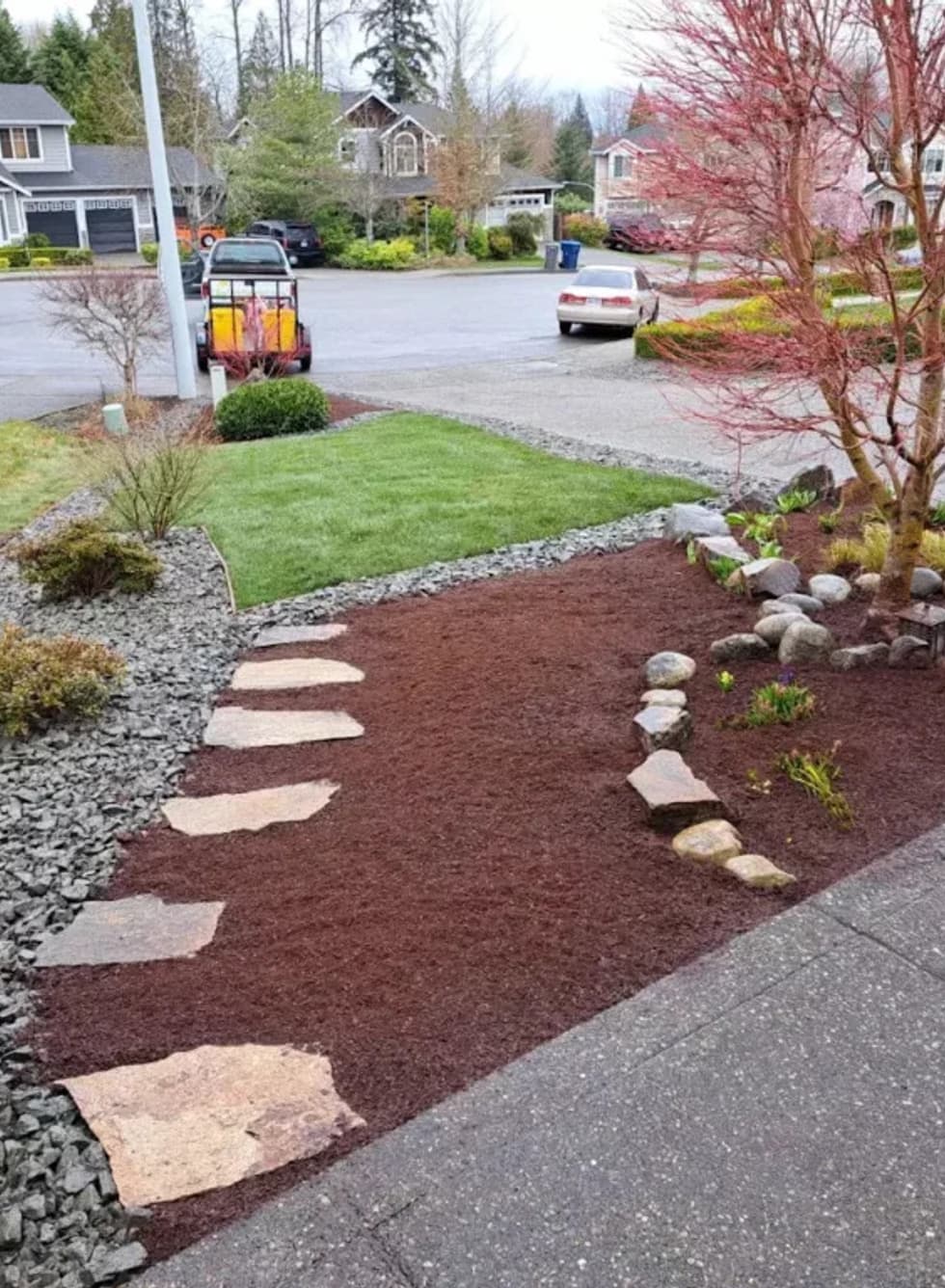
Bark is a blanket, not a cleanup. We pull the weeds and the old matted layer that has turned into soil, edge the bed so the bark has a place to stop, and put down enough depth to block light. A sprinkle that still shows dirt is not a bark job. It is a way to pay for the same weeds in June.
We keep bark off the crowns of shrubs and off the trunks of trees. A volcano of mulch against the bark of a tree is how the trunk rots. Two to three inches across the soil, pulled back at the stems.
What we look at first
- Whether the old bark has composted into a weed bed
- The edge against the lawn
- Plants that are buried already
- How far the truck can get the load
How often
Top up every year or two, an inch or so, once the first depth is right. Starting over every spring means the first job was thin or the bed was never weeded. We would rather be on a light top-up.
Color
Natural bark fades to gray. That is normal. Dyed product holds a color and also stains concrete when it is fresh. We tell you which load you are getting. We do not promise the color in the photo will survive a winter.
Old fabric
Landscape fabric under bark is where weeds root in the dust on top, and where water sheets off. When we find it, we take it out if the bed is weedy. We do not sell a new layer of it.
More from this crew
- Beauty bark across Snohomish County
- Lawn weed control in Mountlake Terrace
- Yard cleanup in Mountlake Terrace
- Landscape design in Mountlake Terrace
- Tree and shrub pruning in Mountlake Terrace
- Beauty bark in Lynnwood
- Beauty bark in Edmonds
- Beauty bark in Brier
Sources for the climate and the water
- USDA plant hardiness map for choosing plants that can take a Snohomish County winter.
- EPA WaterSense on watering less once a lawn or a new planting is established.
- EPA Soak Up the Rain on keeping roof and yard water from becoming someone else’s problem.