Mercer Island sits in the middle of Lake Washington, so almost every street runs downhill to the water. Lots are steep, the tree canopy is old and tall, and the shoreline lots have banks that move when runoff from the street above has nowhere else to go. Bark on a slope toward the lake is bark in the lake. We mulch the upper beds and we plant the shore.
King County · ZIP 98040
Do not mulch the bank into the water
Around the house and along a flat path, bark is appropriate and we keep it edged. The shoreline planting stays bare of loose mulch, or it gets a heavier, tucked-in cover that will not float. We do not blow the leftover into the slope.
Beds that shed toward a drain get a thickness that stays put when someone waters, so we are not feeding the drain a winter of fines.
The ground in Mercer Island
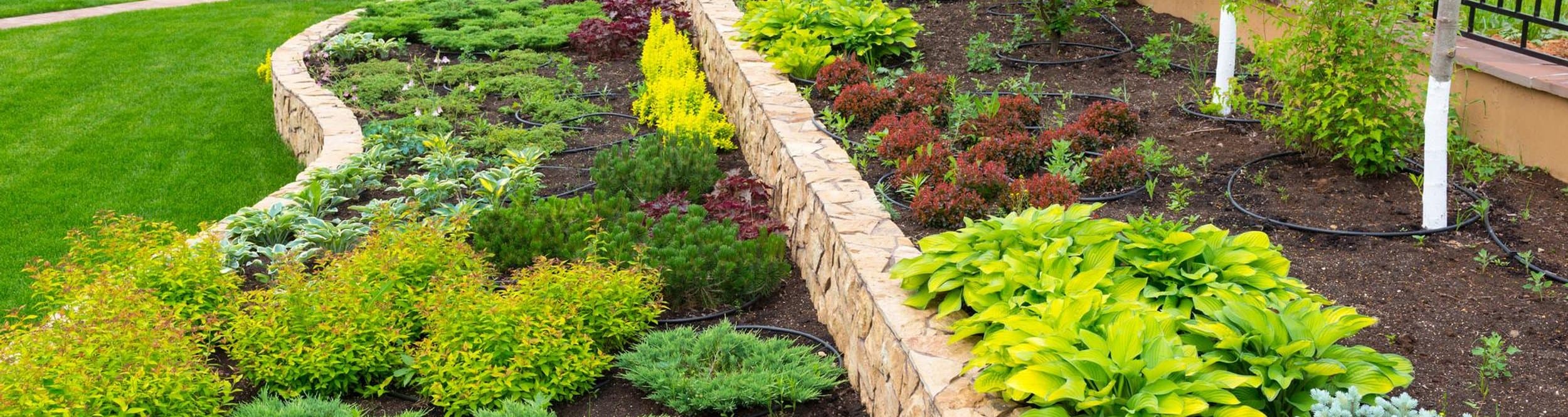
Most of our work here is on slopes. A patio or terrace has to be cut into the hill with a real base and a drain behind any wall, or the first wet winter shows where the water wants to go. On the lakefront lots we keep native shrubs on the bank, because they hold the soil better than lawn, and we take runoff to a drain or a rain garden instead of letting it sheet over the edge.
The city is strict about removing large trees and about work near the shoreline. We check what needs a permit before we cut or dig, and we plan around the trees you have to keep. Under those firs and cedars the ground is shady and mossy, so we often turn worn-out lawn into planting beds and stone paths that stay clean year-round.
How we do the work
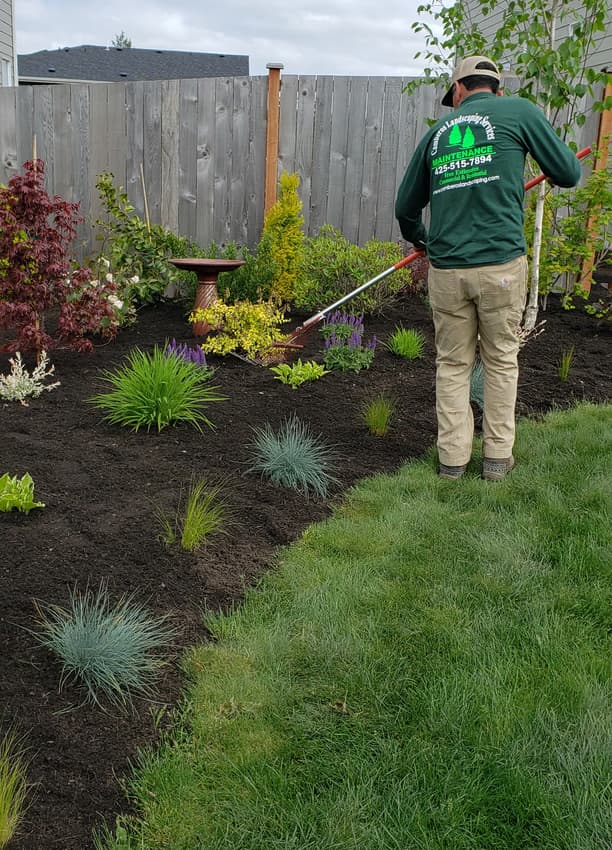
Bark is a blanket, not a cleanup. We pull the weeds and the old matted layer that has turned into soil, edge the bed so the bark has a place to stop, and put down enough depth to block light. A sprinkle that still shows dirt is not a bark job. It is a way to pay for the same weeds in June.
We keep bark off the crowns of shrubs and off the trunks of trees. A volcano of mulch against the bark of a tree is how the trunk rots. Two to three inches across the soil, pulled back at the stems.
What we look at first
- Whether the old bark has composted into a weed bed
- The edge against the lawn
- Plants that are buried already
- How far the truck can get the load
Depth
About three inches after it settles, less against the stems, none against the trunk. One inch looks like a lot in the wheelbarrow and does nothing by July. We would rather do a smaller bed correctly.
Old fabric
Landscape fabric under bark is where weeds root in the dust on top, and where water sheets off. When we find it, we take it out if the bed is weedy. We do not sell a new layer of it.
Color
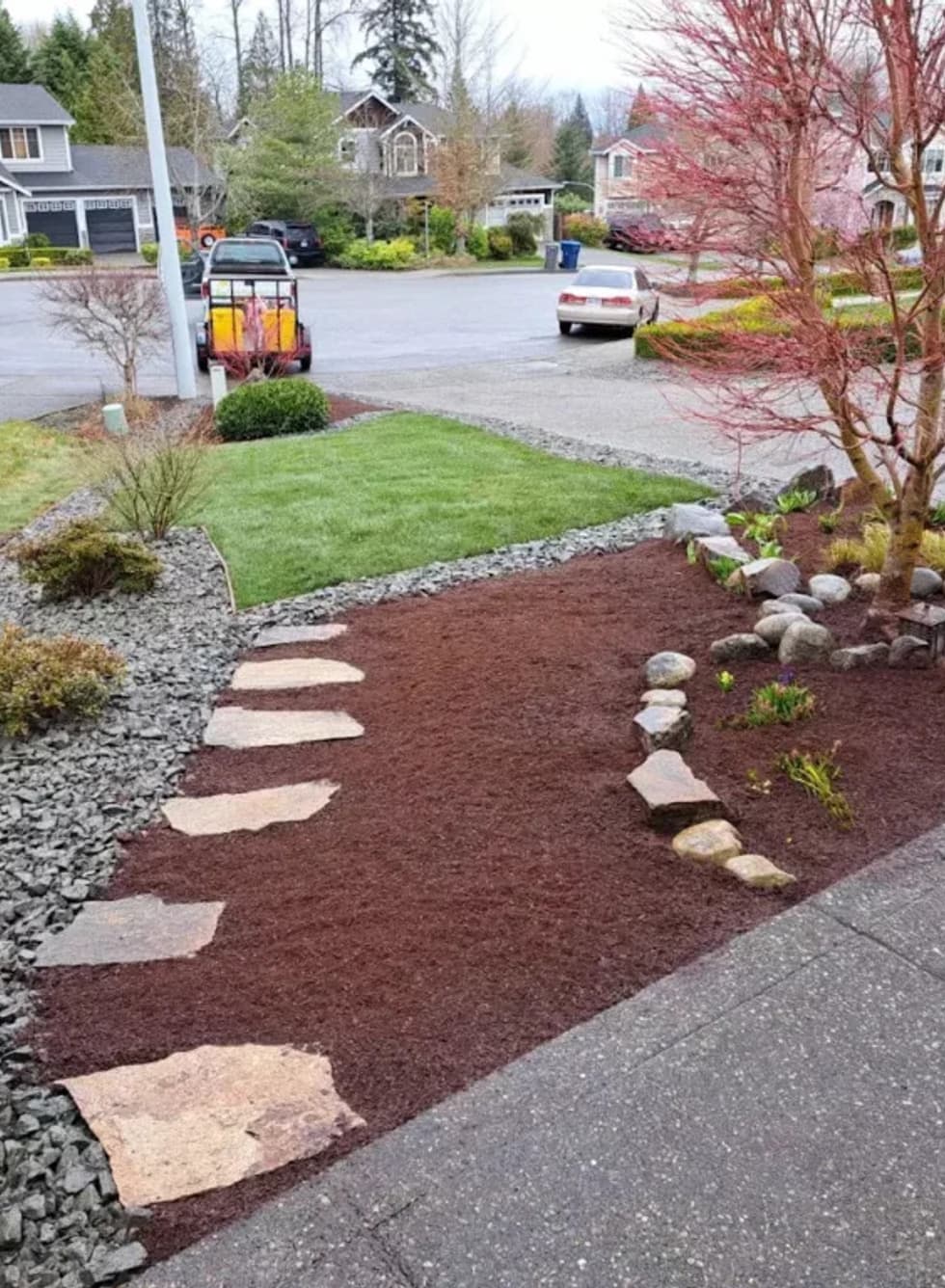
Natural bark fades to gray. That is normal. Dyed product holds a color and also stains concrete when it is fresh. We tell you which load you are getting. We do not promise the color in the photo will survive a winter.
More from this crew
- Beauty bark across the region
- Lawn weed control in Mercer Island
- Yard cleanup in Mercer Island
- Landscape design in Mercer Island
- Tree and shrub pruning in Mercer Island
- Beauty bark in Sammamish
Sources for the climate and the water
- USDA plant hardiness map for choosing plants that can take a King County winter.
- EPA WaterSense on watering less once a lawn or a new planting is established.
- EPA Soak Up the Rain on keeping roof and yard water from becoming someone else’s problem.