Sammamish sits on a plateau above Lake Sammamish, and most of it was built out as subdivisions in the last thirty years. Under a thin layer of topsoil is glacial till, a hardpan that water barely soaks into, and many lots back onto tall stands of Douglas fir. Shaded lots do not need a leaf-by-leaf perfect floor. They need the roof clear of duff, the paths walkable, and the invasives cut.
King County · ZIP 98074
The woods moving into the yard
We take the maple and fir debris off the house, the gutters if that was agreed, and the beds. Ivy and blackberry get cut back to a line you can keep. We do not scalp the ferns that belong there so the yard looks “empty.”
Haul volume is the cost. A wooded lot can make more debris in a day than a suburban mow makes in a year. We look at the piles before we price it.
The ground in Sammamish
The till is the reason so many yards here stay soggy in winter and dry out fast in summer. Water sits on top of the hardpan, so a new lawn or patio needs drainage planned in from the start. We put in French drains, grade the yard away from the house, and build patio bases deep enough that they do not heave.
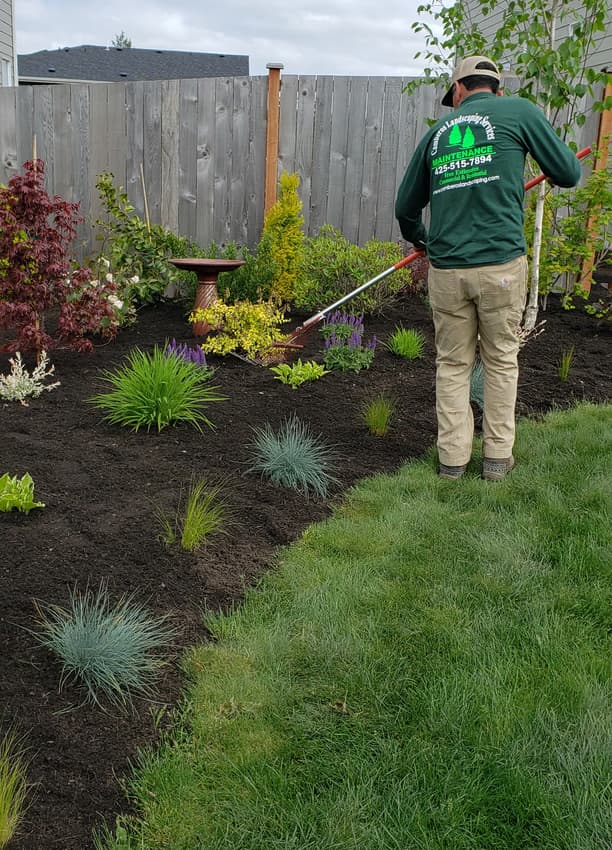
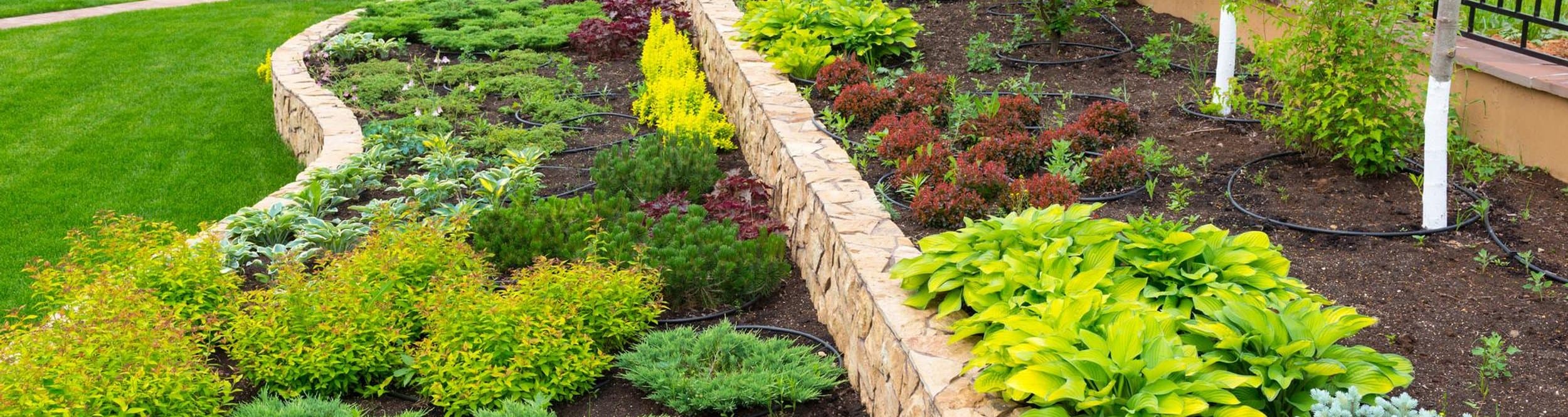
Many neighborhoods have HOA rules for fences, front yards, and plant choices, and we work to those standards. Lots along the greenbelts get heavy shade and needle drop, so we use shade-tolerant planting and bark where grass has given up. Larger backyards here are a good fit for a full redesign: a paver patio, a low retaining wall to level the slope, and irrigation on a timer for the dry months.
How we do the work
A cleanup is debris gone, beds redefined, and the hazards cut. We haul. A pile at the curb that sits for a month is not a finish. Brush, rotten wood, the fallen fence panel, the blackberries that took the side yard: that is the work.
We do not “clean” a yard by blowing leaves into the beds and covering them with a thin coat of bark. If bark is part of the visit, the bed is weeded first. If it is not in the bid, we do not fake it.
The walk-through is the scope. A bigger pile, a surprise blackberry thicket, or a tree that needs a climber changes the day, and we say that before we start rather than after the trailer is full.
What we look at first
- What is actually being hauled
- Blackberries, downed limbs, and junk versus a normal leaf drop
- Access for a trailer
- Whether you want it bare and ready, or just safe and tidy
Blackberries
Cut to the ground and hauled, with the understanding they return from the roots. A cleanup is not eradication. A follow-up, or a dig-out if the patch is small, is how you actually get rid of them. We will say which you bought.
Leaves
Off the lawn, off the beds you care about, off the walks. Into the trailer. A wooded corner can keep its duff. Blowing every leaf out of a natural area is busywork, and we will not pretend it is horticulture.
Ready for the next thing
A good cleanup ends with edges you can mow and beds you could bark. If the next step is renovation, we leave the yard ready for that instead of dressing it with mulch we are about to dig through.
More from this crew
- Yard cleanup across the region
- Tree and shrub pruning in Sammamish
- Beauty bark in Sammamish
- Landscaping in Sammamish
- Pressure washing in Sammamish
- Yard cleanup in Mercer Island
Sources for the climate and the water
- USDA plant hardiness map for choosing plants that can take a King County winter.
- EPA WaterSense on watering less once a lawn or a new planting is established.
- EPA Soak Up the Rain on keeping roof and yard water from becoming someone else’s problem.