Edmonds faces the Sound. Salt air reaches the patios, the wind comes off the water, and the soils change as you move up off the beach — sandier near the shore, heavier as the hills rise toward the ferry and the bowl downtown. Lawns that never see the winter sun grow a moss sheet. Salt is a separate injury on the exposed edge, and raking will not cure it.
Snohomish County · ZIP 98020 · 2020 population 42,690
Moss on the north side, salt on the west
The north and east sides of a house near the Sound stay damp. That is where the mat is. We clear it, open the soil, and seed with a mix that can take shade. The windward edge that is burned by salt does not get the same treatment. Those plants are often the wrong plants.
Debris from a coastal lot is heavy and wet. We load it. Leaving it on the parking strip guarantees it is back in the lawn with the next rain.
The ground in Edmonds
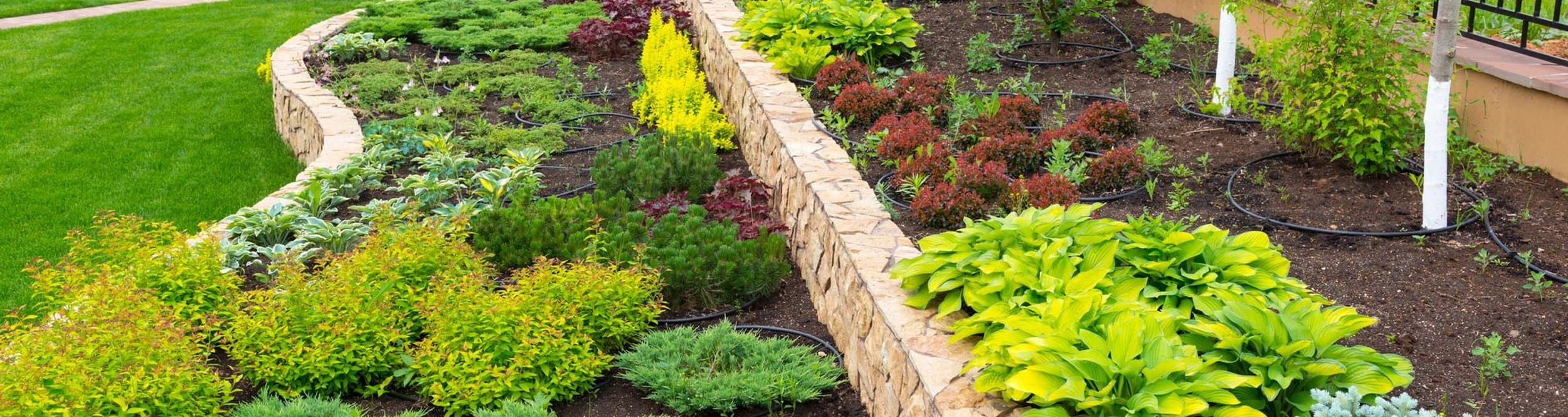
A yard with a view of the water is also a yard in the wind. Screens and plantings have to stand up to salt and to gusts that shred a soft shrub in one winter. Madrone, shore pine, and kinnikinnick already grow on these bluffs for a reason. We use that palette when a client wants the bank to stay put without a weekly watering schedule.
Lower down, salt film builds on pavers and railings, and a pressure-wash is maintenance, not a one-time event. Retaining work on the west-facing slopes is about holding a sandy bank, with drainage behind the wall so the hill does not load up and shove. The older neighborhoods up the hill have more conventional clay and bigger trees, so we do not treat every Edmonds lot like a beach cottage.
How we do the work
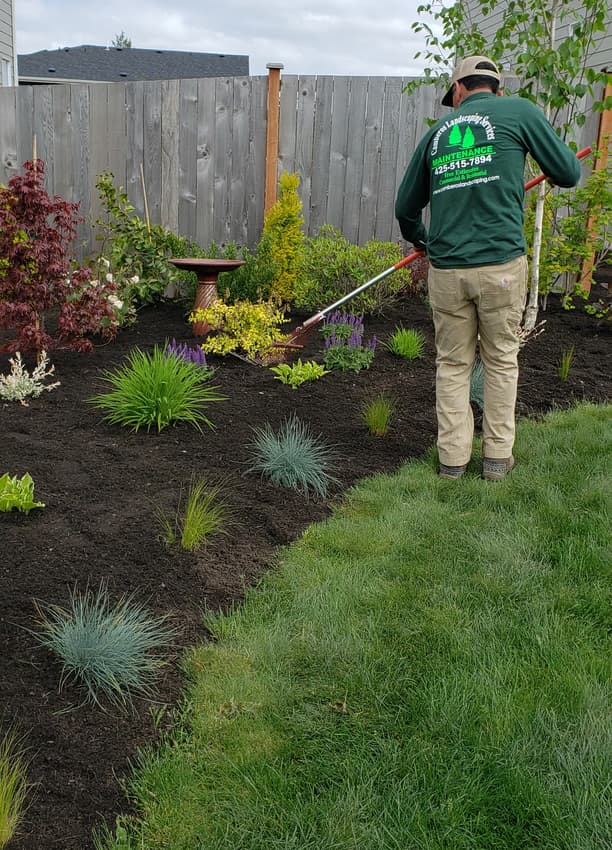
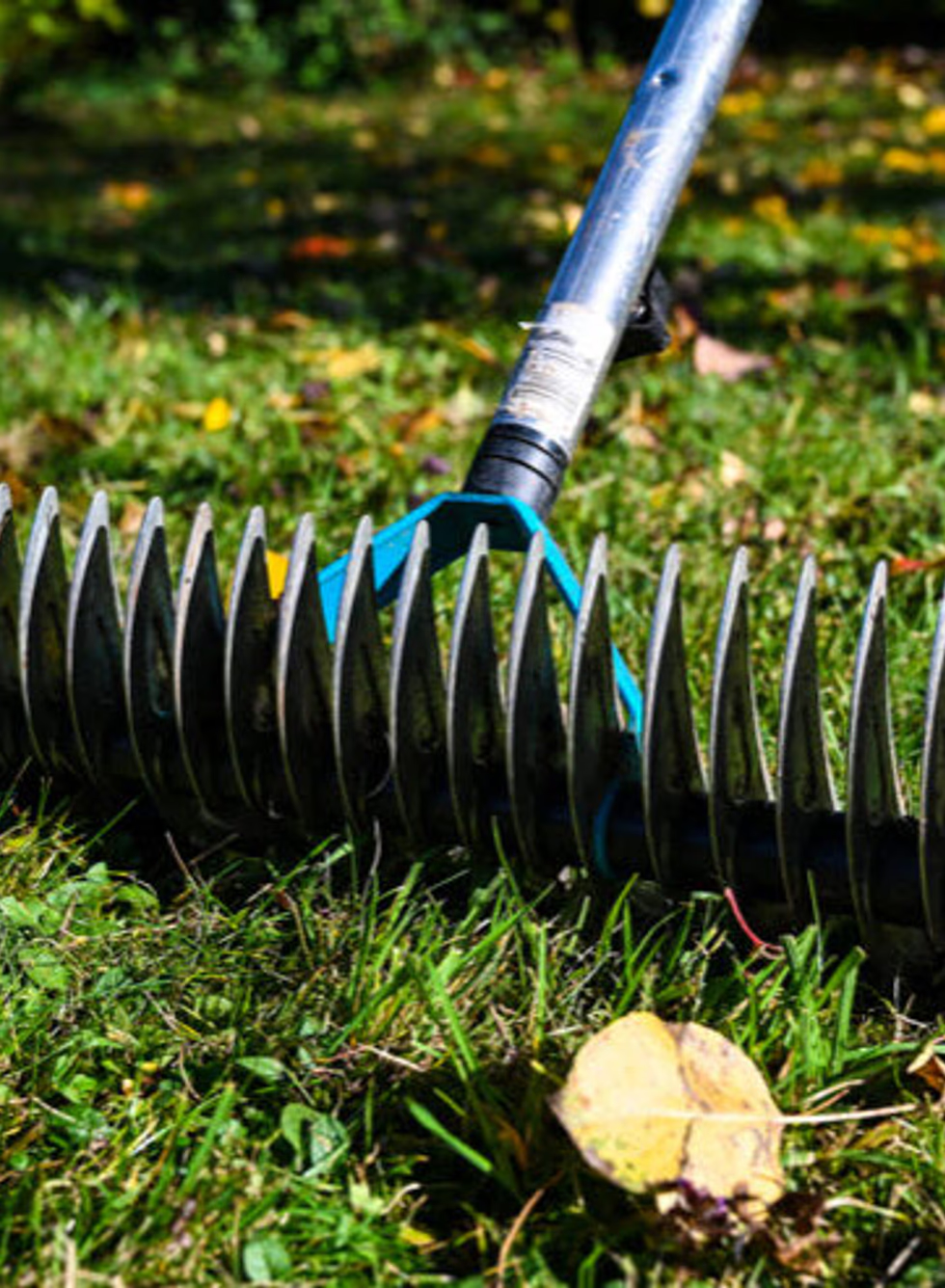
Thatch here is usually moss plus a layer of dead stems, not the classic Midwest straw mat. A power rake set too deep tears out the live grass and leaves a scar. We set the blades to lift the mat and stop when we are in soil.
The debris has to leave the property. A thatch layer raked into the bed or left in windrows just moves the problem. We haul it. If the lawn underneath is mostly dirt and shade, dethatching is the start of a different plan, not a greener lawn by itself.
What we look at first
- How thick the moss mat is
- Whether live grass is under it or the mat is the whole lawn
- Irrigation and mowing height that are growing the thatch back
- A place to stage the trailer so we are not blocking a tight drive
Hauling is part of the job
A dethatched lawn produces a surprising pile, wet and heavy. We load and remove it. Spreading it in the beds plants the moss and the weed seed you just paid to lift.
Pairing it with aeration
On clay and fill we dethatch and then core, in that order. Cores through a mat waste the tines. Seed goes into the opened ground the same day when the season allows.
Mowing height afterward
Cutting to the dirt is how the mat comes back. We leave the grass taller than a golf collar, especially in shade. Tall enough to shade its own soil, short enough to walk.
More from this crew
- Lawn dethatching across Snohomish County
- Lawn aeration in Edmonds
- Lawn seeding in Edmonds
- Lawn mowing in Edmonds
- Lawn fertilization in Edmonds
- Lawn dethatching in Mukilteo
- Lawn dethatching in Lynnwood
- Lawn dethatching in Woodway
Sources for the climate and the water
- USDA plant hardiness map for choosing plants that can take a Snohomish County winter.
- EPA WaterSense on watering less once a lawn or a new planting is established.
- EPA Soak Up the Rain on keeping roof and yard water from becoming someone else’s problem.