Woodway is large, wooded lots and a town of 1,384 people. The canopy is the landscape. Lawns live in the gaps between old trees, the soil stays shaded and cool, and privacy is the reason people bought the property. Shade pavers grow a film. The base still has to be honest, and the surface has to shed, or that film is a slick coating on a puddle.
Snohomish County · ZIP 98020 · 2020 population 1,384
Pavers that will be wet and green
We do not promise a bright, dry patio under a cedar. We promise one that does not settle and does not pitch at the house. Joints stay filled so weeds and moss have less soil to work with. You will still wash it.
Roots are the other constraint. We do not excavate a base through a main root and then act surprised when the tree declines or the patio lifts. The patio moves, or it gets smaller.
The ground in Woodway
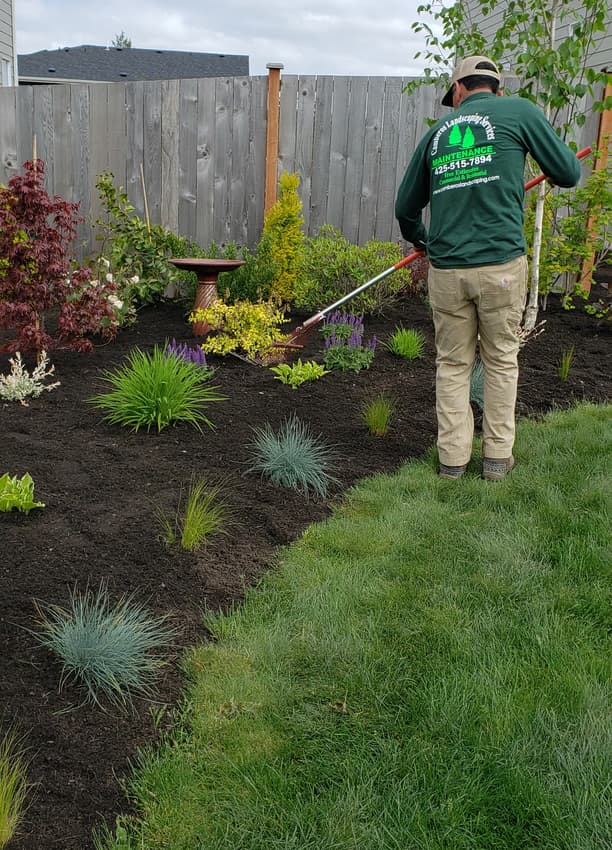
We are not opening these lots to the street. Pruning is about structure, light, and keeping limbs off the house, done so the screen of trees stays. Under that canopy the lawn is the hard part: moss, thin grass, and roots at the surface. Aeration helps the pockets that get some sun. The deep shade wants a different floor — bark, ferns, and the understory that is already trying to grow — not another season of seed that germinates and dies.
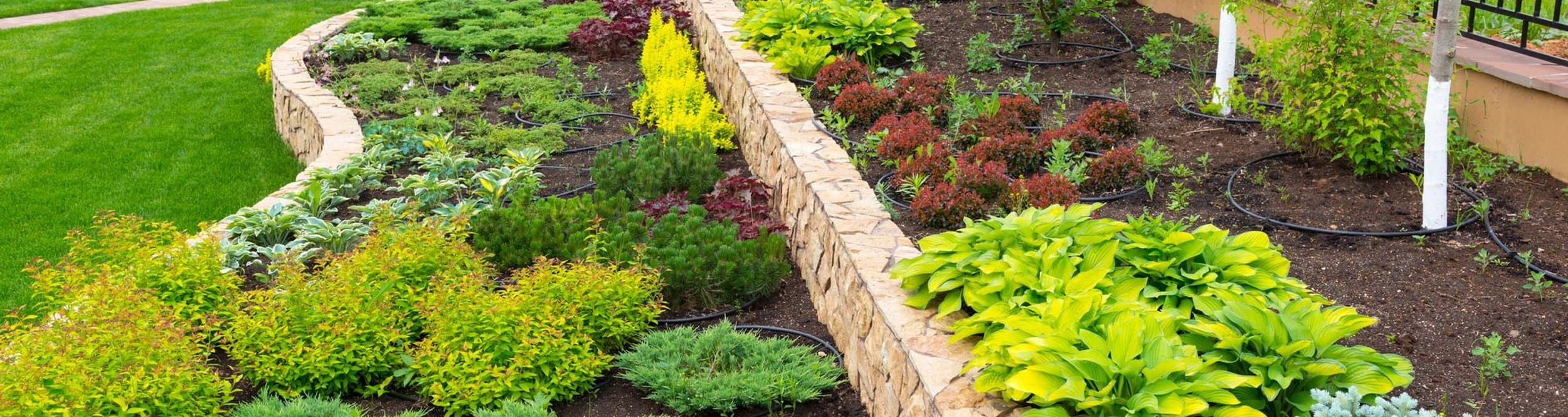
Hardscape, when it belongs, is a terrace or a quiet patio in a clearing, built for wet shade so it does not turn green and slick. Bark on the beds keeps the mud down and the edges readable from the house. The work should look like it was always in the trees, because it is.
How we do the work
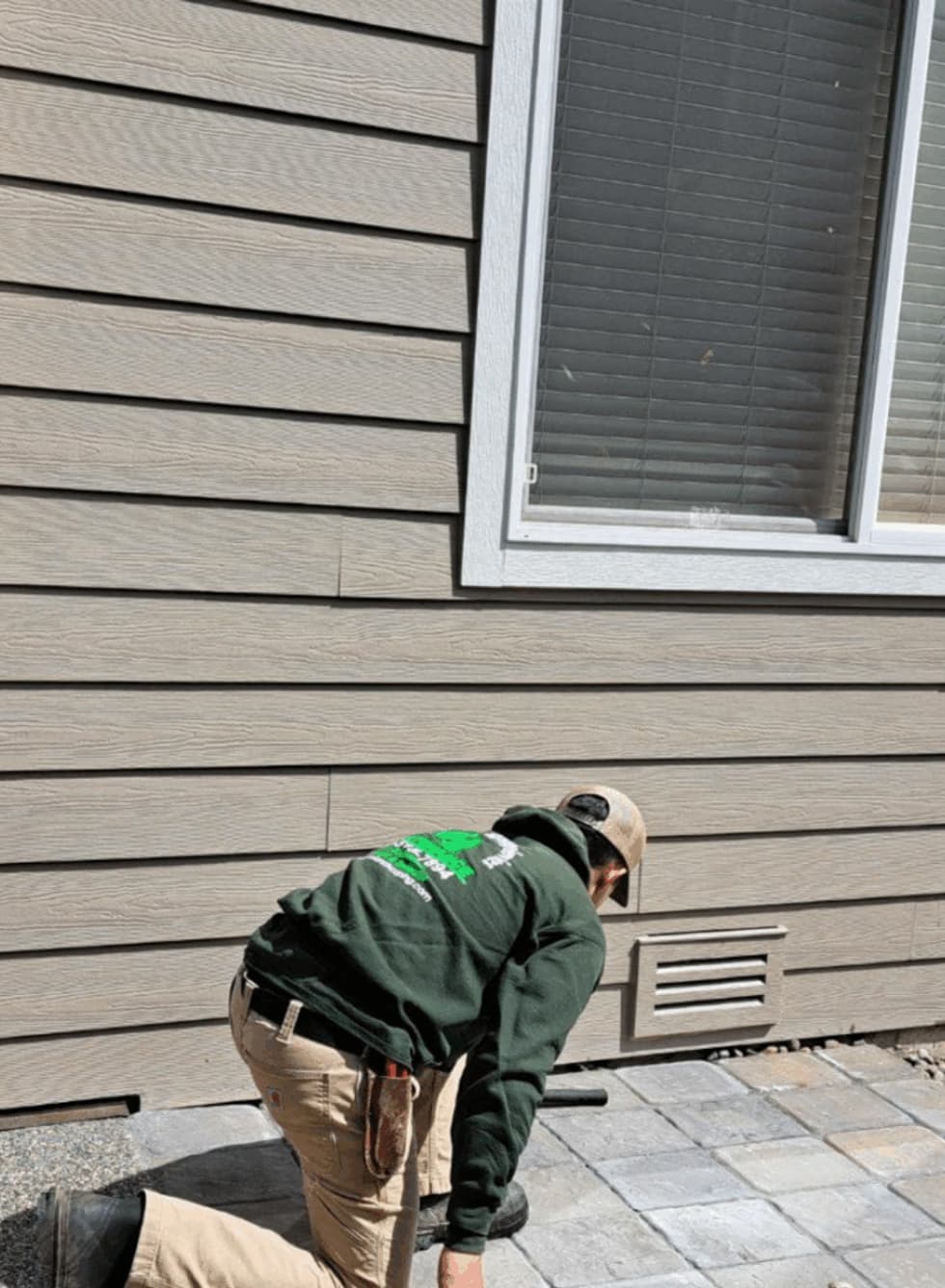
The paver is the skin. The base is the job: excavated, built up in compacted rock, deep enough that this climate will not heave it into waves. We pitch the surface away from the house, we restrain the edges so the field cannot spread, and we sand the joints.
A paver patio set on a couple of inches of loose gravel over clay will look perfect in September and rock underfoot by March. We do not build that, even if the other bid did.
What we look at first
- How the water leaves the surface today
- Clay, fill, or roots under the area
- Edge restraint and where the field ends
- Whether the project is a walk, a patio, or a drive, because the base changes
Joint sand
Swept and settled, then checked. Polymeric sand has a place where ants and heavy rain empty the joints, and it has a failure mode if it is installed wet or left on the face. We use it when it helps, and we wash the haze off before we leave.
The base depth
Deeper for a drive than for a walk, and deeper on clay than the brochure drawn for a dry state. We compact in lifts. A single dumped pile of gravel, raked once, is not a base. You should not see waves after the first winter.
Edges
Plastic or metal restraint, spiked into the compacted base, then buried so you see paver, not a black strip. An edge against soil with no restraint is the row that opens up.
More from this crew
- Paver installation across Snohomish County
- Patio installation in Woodway
- Hardscaping in Woodway
- Gravel installation in Woodway
- Pressure washing in Woodway
- Paver installation in Edmonds
- Paver installation in Mukilteo
Sources for the climate and the water
- USDA plant hardiness map for choosing plants that can take a Snohomish County winter.
- EPA WaterSense on watering less once a lawn or a new planting is established.
- EPA Soak Up the Rain on keeping roof and yard water from becoming someone else’s problem.