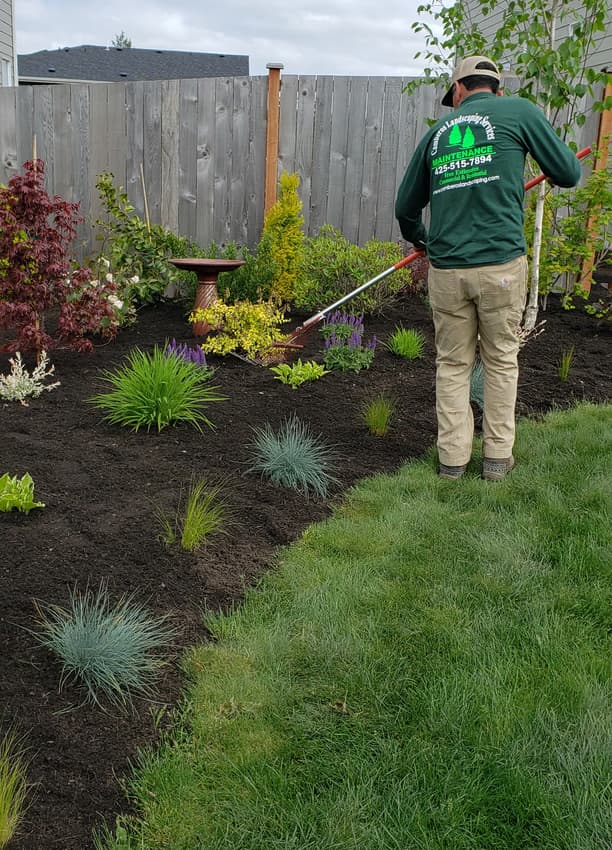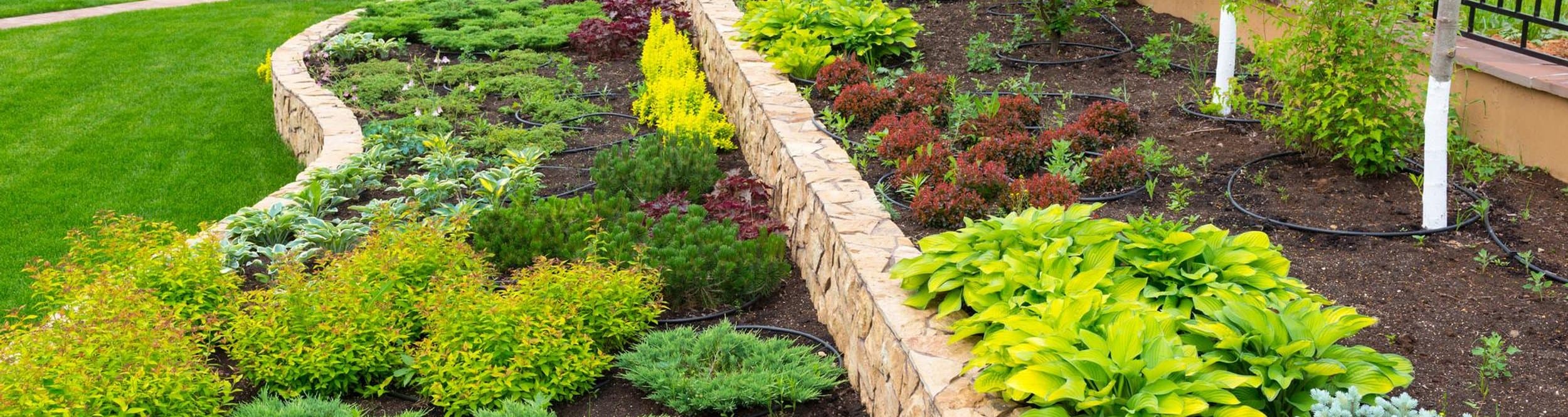

Darrington sits up against the Cascades, with Whitehorse Mountain on the skyline and a harder rain than the towns down on the flats. Soils run rocky, lots break off into steep cuts, and water does not sheet across a lawn so much as it cuts a track and takes the soil with it. A foothill landscape is walls, drains, and a flat place to stand. Ornamental beds are what we add after the bank is not moving.
Snohomish County · ZIP 98241 · 2020 population 1,358
Stabilize, then make it usable
We hold the slope, put the path where you can walk in the rain, and plant tougher natives and conifers where the soil is thin. Lawn is a small bench, or it is seed, not an acre of sod on a grade. Cleanup of the edge is often the first phase so we can see the ground.
Material access is planned. If the driveway is the limit, the design uses what we can get up it.
The ground in Darrington
This is a small town with mountain weather. A wall that would be decorative in Mill Creek is structural here: it is holding a bank that wants to move every winter. We see shallow, rocky ground, overhanging fir and hemlock, and driveways that wash out where the grade dumps onto the road.
Planting lists shrink to what can handle cold, wet, and poor soil. Huckleberry and mountain hemlock already grow on the edges of these properties. A lawn is possible on the flatter bench of a lot, but it needs seed and soil that can take a short season, not a turf schedule copied from Everett. Cleanup is often about limbs over the roof and ditches that have filled with gravel from the bank above.
How we do the work
Landscaping, the way we mean it, is building the yard: dirt moved, water handled, plants in the ground, bark and edges finished. It is not a mow, and it is not only a patio. When a project is really just a patio or just a drain, we call it that and we price that.
We plant what can live through a wet winter and a dry August without a full-time gardener. The sequence is always the same. Get the water right, set the hard surfaces, then plant. Plants first is how they get buried or stood in a puddle.
What we look at first
- What you want to be able to do in the yard
- The thing that is failing now: water, a slope, a dead lawn, an empty bed
- Trees that stay
- A budget, so we phase instead of half-building everything
Phasing
If the whole yard does not fit the budget, we finish a piece that works: the drainage and the door area, for example. An even layer of unfinished everything looks like we left. A finished half looks like a plan. We prefer the second.
Order of work
Demo and haul, grade and drain, hardscape, soil, plants, bark, irrigation last or with the plants. We do not mulch a bed we are about to trench. You should see the yard get rougher before it gets finished. That is the sequence, not a delay.
Warranty, plainly
We stand behind the build: pitch, drainage, and plants installed correctly. We do not warranty a plant against no water in August, a deer, or a freeze that splits a species we told you was marginal. Establishment watering is your job unless we are contracted to do it.
More from this crew
- Landscaping across Snohomish County
- Landscape design in Darrington
- Yard cleanup in Darrington
- Paver installation in Darrington
- French drain installation in Darrington
- Landscaping in Granite Falls
- Landscaping in Arlington
Sources for the climate and the water
- USDA plant hardiness map for choosing plants that can take a Snohomish County winter.
- EPA WaterSense on watering less once a lawn or a new planting is established.
- EPA Soak Up the Rain on keeping roof and yard water from becoming someone else’s problem.