Sammamish sits on a plateau above Lake Sammamish, and most of it was built out as subdivisions in the last thirty years. Under a thin layer of topsoil is glacial till, a hardpan that water barely soaks into, and many lots back onto tall stands of Douglas fir. Shade, drip, and moss rot rails faster. Air has to reach the wood. A fence tight to the soil under a cedar is compost in a few years.
King County · ZIP 98074
A fence that stays a fence under trees
We keep the bottom clear, we do not attach the fence to the tree, and we do not cut a major root to straighten a line. The line can jog. A tree that grows into a board will win, so we leave room.
Moss on cedar is cosmetic. Rot at the post is not. We set the post right and we tell you a wash every couple of years extends the boards. We are not selling a fence that never weathers.
The ground in Sammamish
The till is the reason so many yards here stay soggy in winter and dry out fast in summer. Water sits on top of the hardpan, so a new lawn or patio needs drainage planned in from the start. We put in French drains, grade the yard away from the house, and build patio bases deep enough that they do not heave.
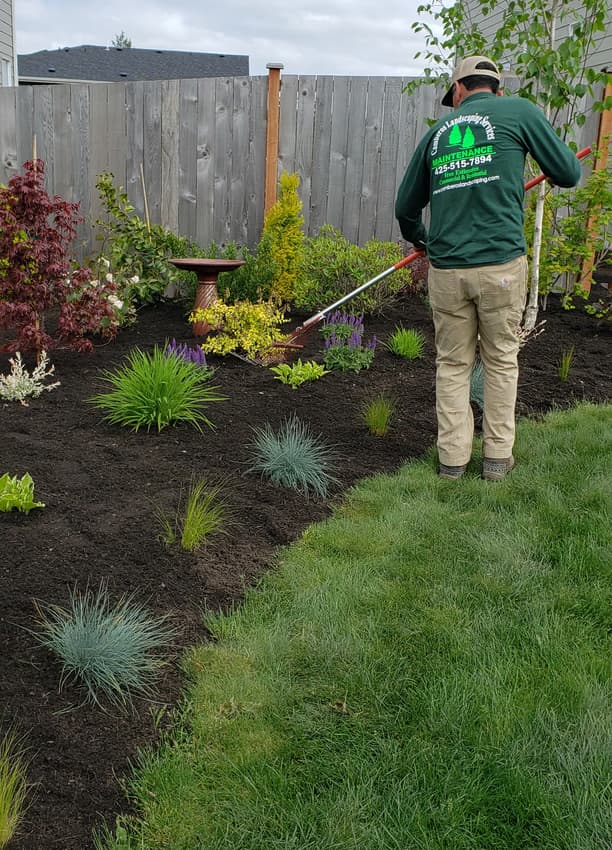
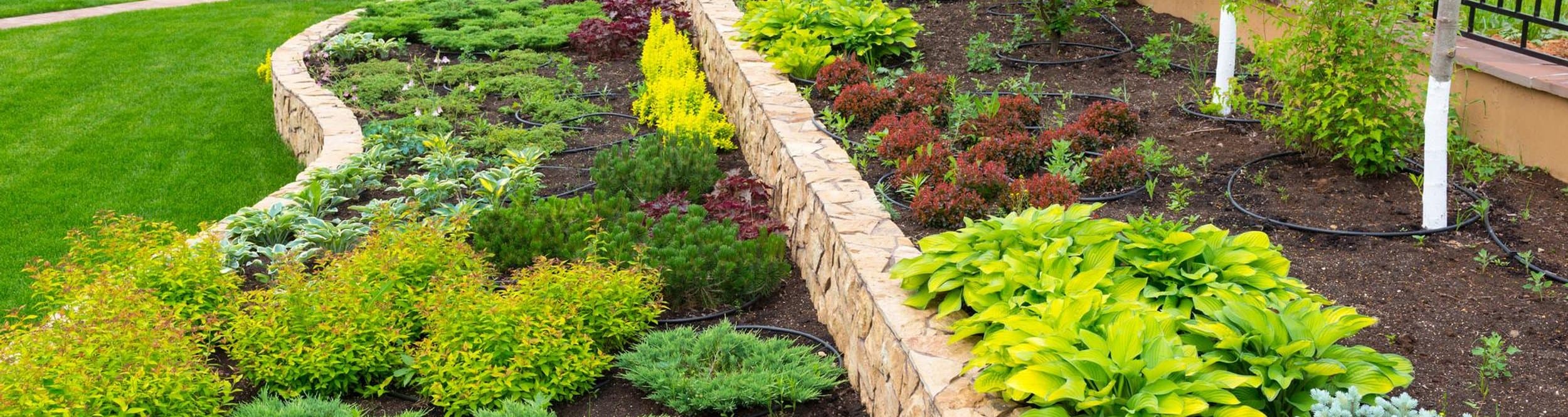
Many neighborhoods have HOA rules for fences, front yards, and plant choices, and we work to those standards. Lots along the greenbelts get heavy shade and needle drop, so we use shade-tolerant planting and bark where grass has given up. Larger backyards here are a good fit for a full redesign: a paver patio, a low retaining wall to level the slope, and irrigation on a timer for the dry months.
How we do the work
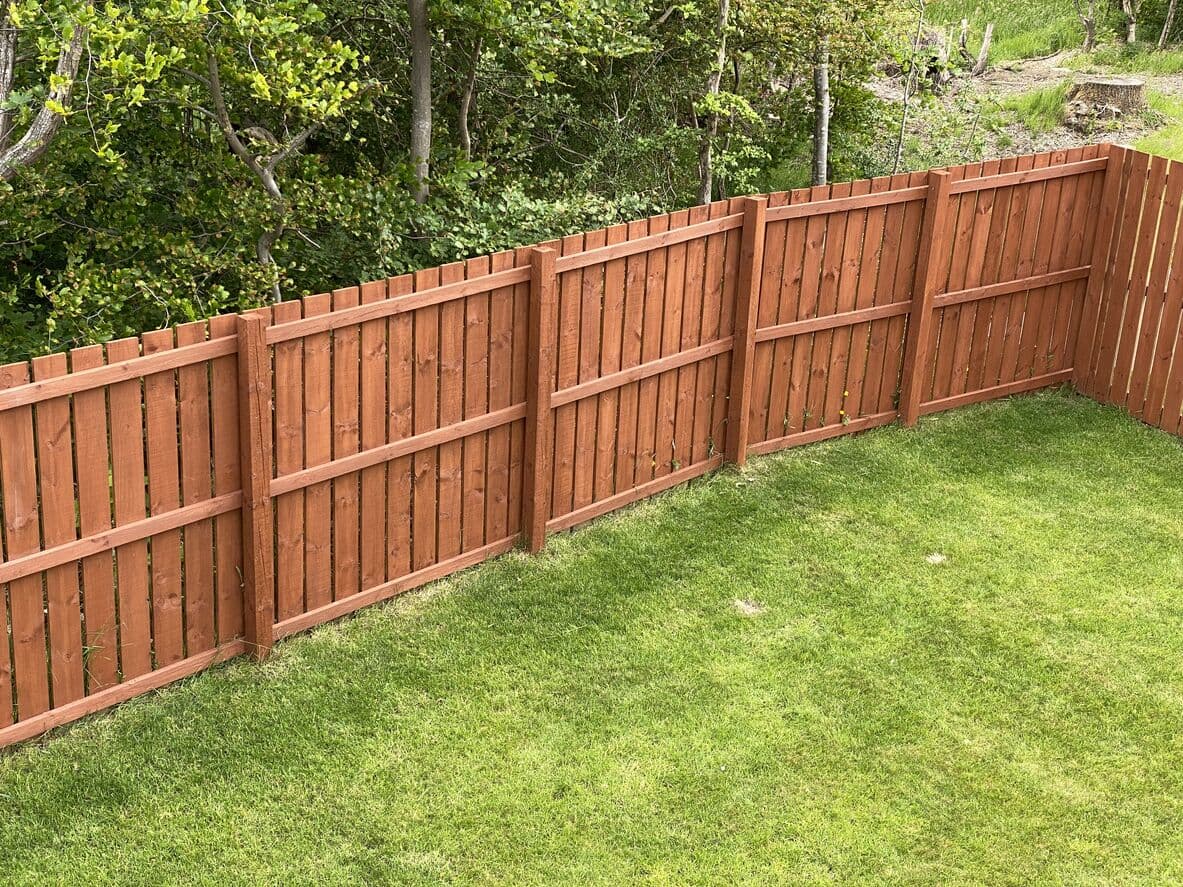
A fence in this county fails at the post. Wood rots where it meets wet soil, and a post set in a soft hole leans when the clay shifts. We set posts deep, we crown the concrete or the rock so water does not pool on the wood, and we keep the bottom of a board fence off the ground so it is not wicking mud.
Cedar for the boards, pressure-treated or steel where it touches the soil. We do not bury untreated lumber. Gates are built as gates, with a brace, not as a short panel that sags by August.
What we look at first
- The property line, before we dig
- Slope, and whether the fence should step or rack
- Who keeps the good side, and where the gates need to swing
- Sprinklers and the neighbor’s grade
Gates
A diagonal brace in the right direction, hinges that can carry the weight, and a latch you can open with one hand. The gate post is bigger or deeper than the line posts. A sagging gate is a build problem, and it shows up fast.
How long cedar lasts
A well-set cedar fence in this rain is often in the fifteen to twenty year range, longer if the bottom stays dry and you stain it before it goes gray and split. The posts outlive a careless bottom board. We build so you can replace boards later without replacing the line.
Stepped or racked
Stepped panels on a real slope, so the boards stay plumb and the gaps stay even. Racking a flat panel down a hill twists the frame. We pick the method from the grade, not from a photo.
More from this crew
- Fence installation across the region
- Retaining walls in Sammamish
- Gravel installation in Sammamish
- Hardscaping in Sammamish
- Landscaping in Sammamish
- Fence installation in Mercer Island
Sources for the climate and the water
- USDA plant hardiness map for choosing plants that can take a King County winter.
- EPA WaterSense on watering less once a lawn or a new planting is established.
- EPA Soak Up the Rain on keeping roof and yard water from becoming someone else’s problem.