Stanwood is where the subdivisions run out and the fields start. Lots are larger, drives are longer, and the ground is the open, often heavy soil of a farm edge rather than a city fill pad. A rural bark budget disappears if we try to mulch every fenceline. We mulch the beds you see and weed, and we mow the rest.
Snohomish County · ZIP 98292 · 2020 population 7,915
Beds by the house, not the whole field edge
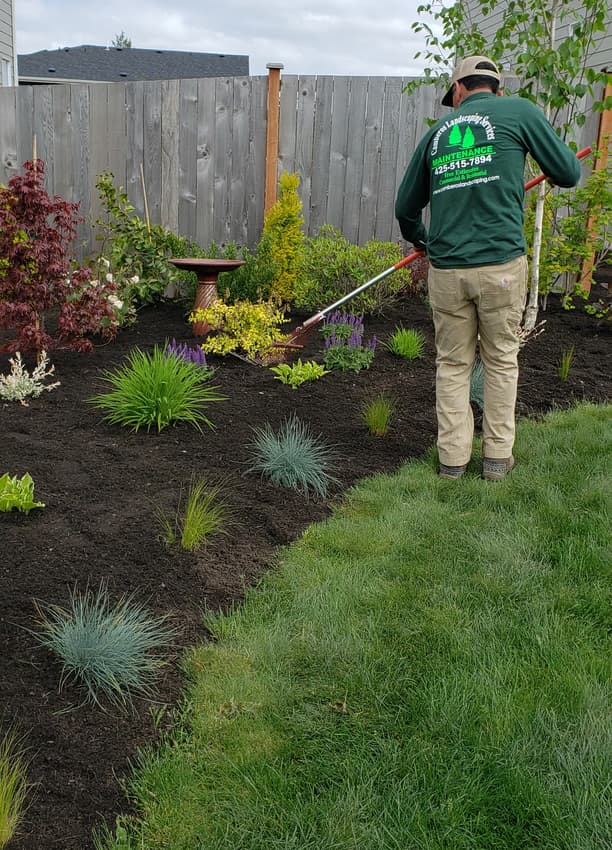
The house garden gets a proper depth and an edge a mower can follow. The long perennial row, if you have one, gets barked after it is weeded, and we are honest about the yards of it. A thin coat on a huge area is worse than a thick coat on the beds that matter.
Field grass will try to invade. The edge is what stops it. We cut that edge so it is a line, not a suggestion.
The ground in Stanwood
A Stanwood place might be a house, a lawn that is really a small pasture, a gravel drive, and a fence that has to mean something — keeping a view open, marking a line, holding a gentle slope. We mow and aerate at a scale that does not make sense on a Lynnwood lot. Weed pressure is real because the seed source is the field next door, not a crack in a sidewalk.
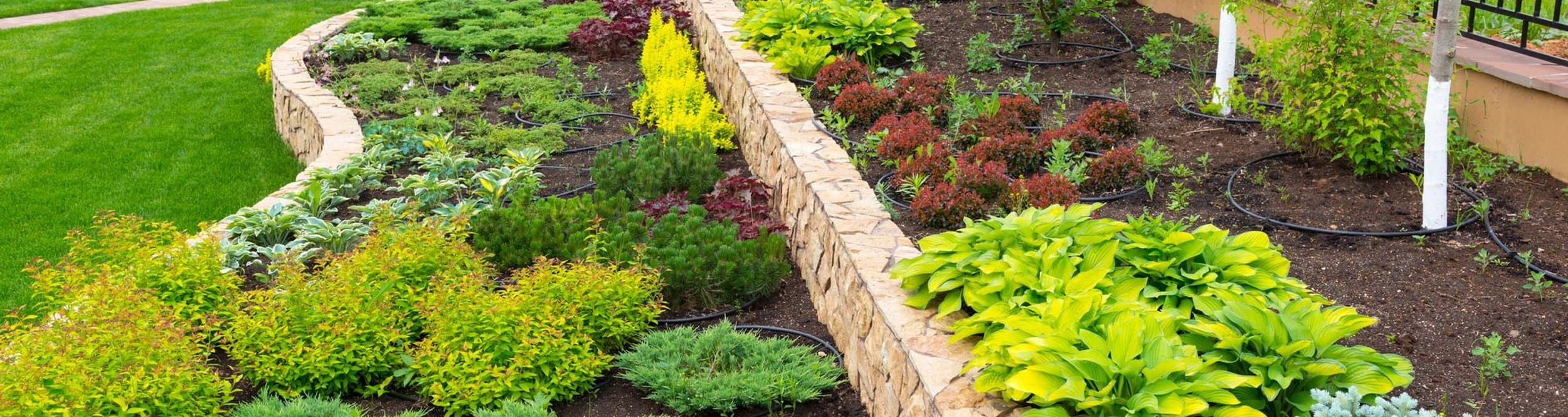
Drainage still matters. Flat or gently sloping heavy ground will sit wet. We use gravel where a paved drive would be wasted money, and a low wall where a bank needs a clean edge. Plantings can be simpler and tougher. The goal on a lot this size is a yard you can live in without a crew every week, with the edges kept and the drive solid.
How we do the work
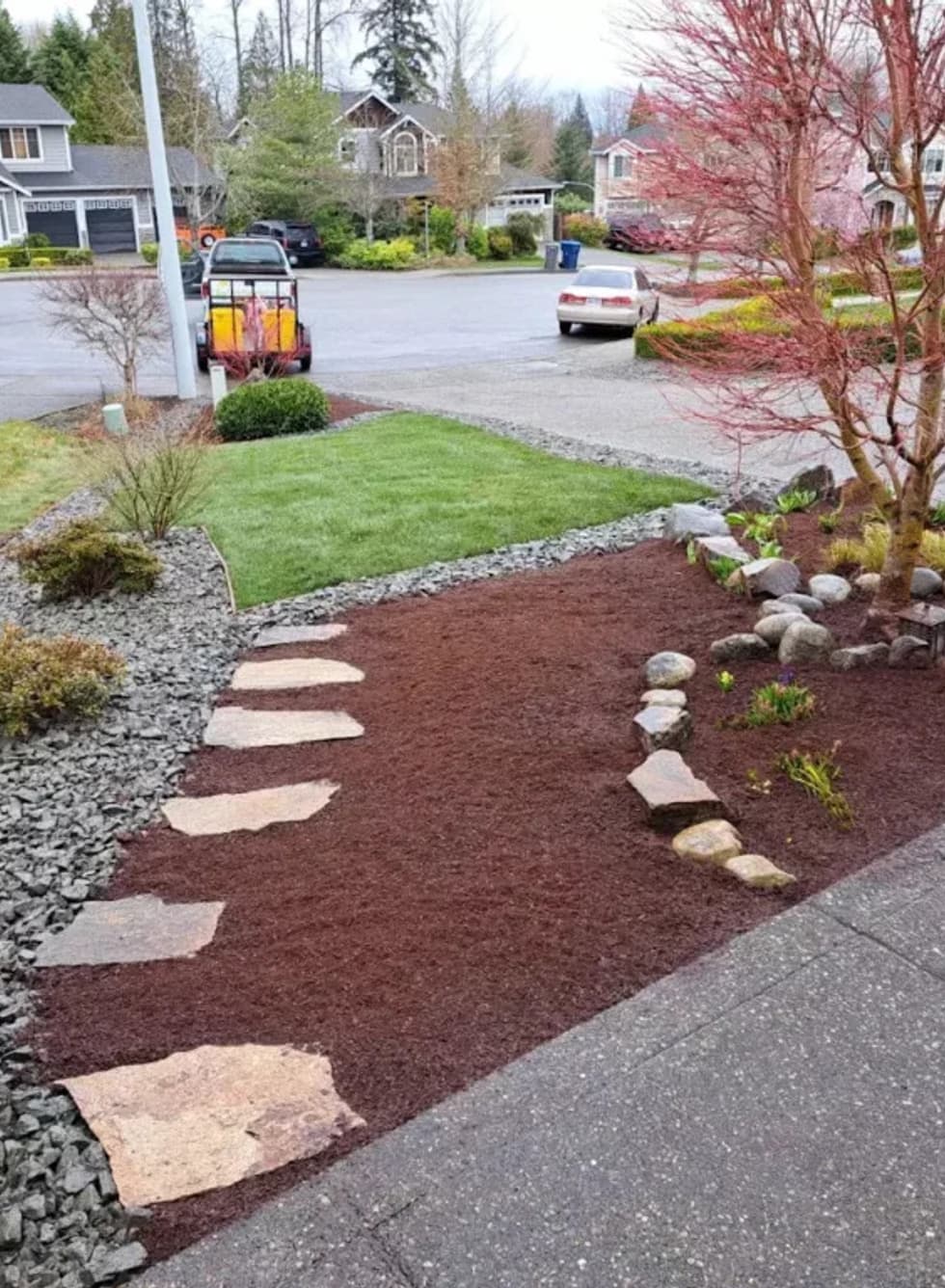
Bark is a blanket, not a cleanup. We pull the weeds and the old matted layer that has turned into soil, edge the bed so the bark has a place to stop, and put down enough depth to block light. A sprinkle that still shows dirt is not a bark job. It is a way to pay for the same weeds in June.
We keep bark off the crowns of shrubs and off the trunks of trees. A volcano of mulch against the bark of a tree is how the trunk rots. Two to three inches across the soil, pulled back at the stems.
What we look at first
- Whether the old bark has composted into a weed bed
- The edge against the lawn
- Plants that are buried already
- How far the truck can get the load
Old fabric
Landscape fabric under bark is where weeds root in the dust on top, and where water sheets off. When we find it, we take it out if the bed is weedy. We do not sell a new layer of it.
Depth
About three inches after it settles, less against the stems, none against the trunk. One inch looks like a lot in the wheelbarrow and does nothing by July. We would rather do a smaller bed correctly.
How often
Top up every year or two, an inch or so, once the first depth is right. Starting over every spring means the first job was thin or the bed was never weeded. We would rather be on a light top-up.
More from this crew
- Beauty bark across Snohomish County
- Lawn weed control in Stanwood
- Yard cleanup in Stanwood
- Landscape design in Stanwood
- Tree and shrub pruning in Stanwood
- Beauty bark in Arlington
- Beauty bark in Marysville
Sources for the climate and the water
- USDA plant hardiness map for choosing plants that can take a Snohomish County winter.
- EPA WaterSense on watering less once a lawn or a new planting is established.
- EPA Soak Up the Rain on keeping roof and yard water from becoming someone else’s problem.