The Stillaguamish sits on the north edge of town, and a lot of the yards along the valley floor are old river ground: fertile when it drains, and a slick gray clay when it does not. Winter rain piles up against houses that back toward the Centennial Trail and the river parks, and the lawn stays soft long after the street looks dry. A tight rock face in clay holds water like a wall. We leave the voids working and we give the water a path, or the stones walk forward.
Snohomish County · ZIP 98223 · 2020 population 19,847
Rock as an edge, not a dam
Valley rock walls are usually low: a bed edge, a short bank by the drive, a place to take up a foot of grade. We still bury the base course. Setting pretty stone on the grass is a border, and it will heave.
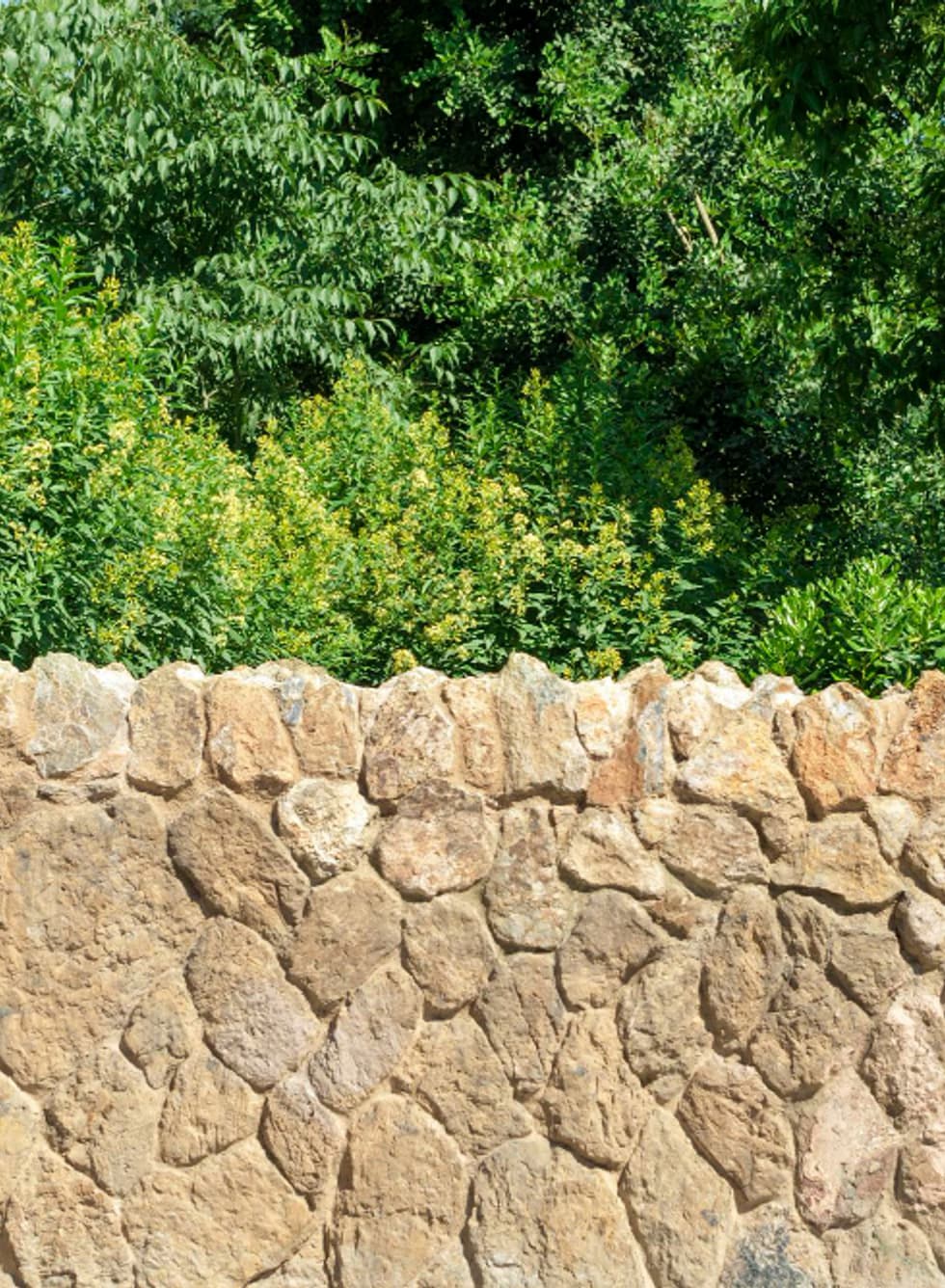
The stone looks right with vine maple and a gravel path. It looks wrong as a bright, uniform stack in a farm field. We pick rock that is the color of the dirt, not a showpiece from another state.
The ground in Arlington
Arlington is a valley town, not a hillside suburb. Lots near the farmland and the trail are often open to the west wind and sit on clay that holds water. After a wet week the soil smears under a boot and the moss moves into any thin spot in the grass. Houses closer to the river have a second problem: the ground is low, so a downspout that just dumps at the foundation has nowhere useful to send the water.
We plan work around that. Drainage goes in before we talk about a patio or a new lawn. Native plantings that actually belong on this floodplain — vine maple, salmonberry, and other understory that can take wet feet — do better than a plant list copied from a drier lot. Gravel paths and low rock work fit the rural edges of town without pretending the soil is something it is not.
How we do the work
A rock wall is dry-stacked or lightly set, with the weight in the stone and the drainage in the voids. It is not a veneer glued to a failing timber wall. We use rock big enough for the height, with a face that leans back into the hill, and smaller rock locked behind so the soil does not pipe through.
Good rock work looks heavier at the bottom. If every stone is the same patio-sized block, it is not a wall, it is a stack. We source local stone and we will tell you when the access cannot take the boulder the job wants.
What we look at first
- Height and whether it is structural or a garden edge
- Machine access for real boulders
- The soil behind: clay that needs a drain, or rock that already sheds
- An existing wall we are tying into
Tying into old rockery
We can often continue an existing rockery if the old base is still honest. If the old wall is tipping, we take it down and use the good stone again. Matching a lean is how you extend a failure.
The base course
The biggest stones, buried, on compacted rock or competent ground. If the first course is the one you can see sitting on the grass, the wall is already failing. You should see the second course at grade, not the bottom of the first.
Dry stack versus mortared
Most of our rock walls are dry, so water can leave and the wall can move a little without cracking a joint. Mortar is for a low, formal edge that is not holding a wet hill. We do not mortar a drainage problem shut.
More from this crew
- Rock walls across Snohomish County
- Retaining walls in Arlington
- Gravel installation in Arlington
- Landscaping in Arlington
- Hardscaping in Arlington
- Rock walls in Marysville
- Rock walls in Granite Falls
- Rock walls in Stanwood
Sources for the climate and the water
- USDA plant hardiness map for choosing plants that can take a Snohomish County winter.
- EPA WaterSense on watering less once a lawn or a new planting is established.
- EPA Soak Up the Rain on keeping roof and yard water from becoming someone else’s problem.