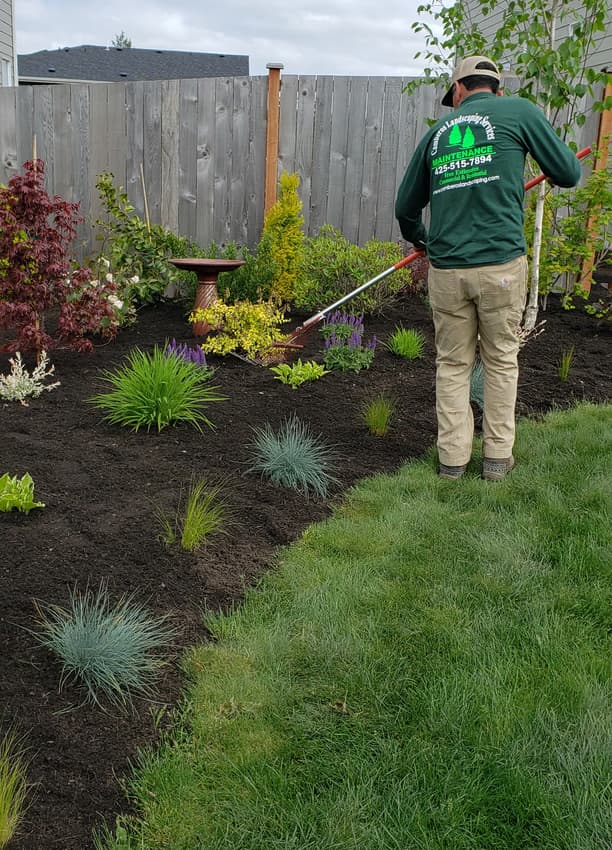

The Stillaguamish sits on the north edge of town, and a lot of the yards along the valley floor are old river ground: fertile when it drains, and a slick gray clay when it does not. Winter rain piles up against houses that back toward the Centennial Trail and the river parks, and the lawn stays soft long after the street looks dry. A landscaping project on flat clay that does not start with water becomes a pretty yard that is soft until May. We dig the drains and set the grade before we plant or sod.
Snohomish County · ZIP 98223 · 2020 population 19,847
Drainage, then lawn, then beds
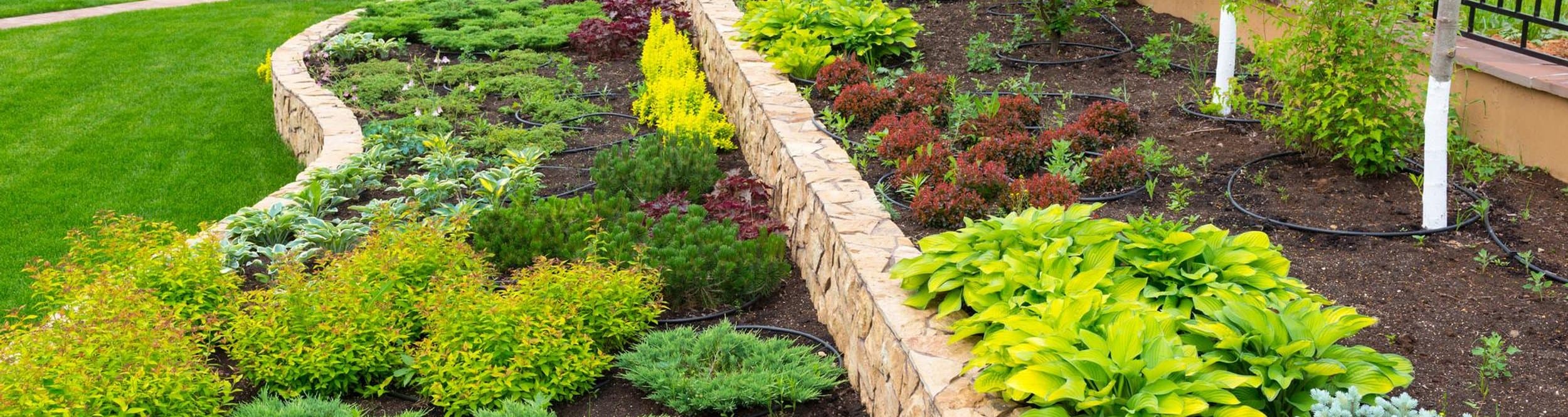
Raised beds, a lawn only where it will drain, a path that is not mud, and plants that can take heavy soil. Fruit trees get sited where you will pick them, not as a decoration in the wet corner. Bark finishes the beds after the soil is shaped, not before.
We keep the look open. These are valley lots. A crowded, over-planted design is more weeding than you want.
The ground in Arlington
Arlington is a valley town, not a hillside suburb. Lots near the farmland and the trail are often open to the west wind and sit on clay that holds water. After a wet week the soil smears under a boot and the moss moves into any thin spot in the grass. Houses closer to the river have a second problem: the ground is low, so a downspout that just dumps at the foundation has nowhere useful to send the water.
We plan work around that. Drainage goes in before we talk about a patio or a new lawn. Native plantings that actually belong on this floodplain — vine maple, salmonberry, and other understory that can take wet feet — do better than a plant list copied from a drier lot. Gravel paths and low rock work fit the rural edges of town without pretending the soil is something it is not.
How we do the work
Landscaping, the way we mean it, is building the yard: dirt moved, water handled, plants in the ground, bark and edges finished. It is not a mow, and it is not only a patio. When a project is really just a patio or just a drain, we call it that and we price that.
We plant what can live through a wet winter and a dry August without a full-time gardener. The sequence is always the same. Get the water right, set the hard surfaces, then plant. Plants first is how they get buried or stood in a puddle.
What we look at first
- What you want to be able to do in the yard
- The thing that is failing now: water, a slope, a dead lawn, an empty bed
- Trees that stay
- A budget, so we phase instead of half-building everything
Plants we will not specify
Anything that wants a dry summer and no rain in winter, unless you understand it is a gamble. We plant for zone and for the wet. A plant you loved in California can be attempted in a pot. It should not be the backbone of the yard.
Order of work
Demo and haul, grade and drain, hardscape, soil, plants, bark, irrigation last or with the plants. We do not mulch a bed we are about to trench. You should see the yard get rougher before it gets finished. That is the sequence, not a delay.
Phasing
If the whole yard does not fit the budget, we finish a piece that works: the drainage and the door area, for example. An even layer of unfinished everything looks like we left. A finished half looks like a plan. We prefer the second.
More from this crew
- Landscaping across Snohomish County
- Landscape design in Arlington
- Yard cleanup in Arlington
- Paver installation in Arlington
- French drain installation in Arlington
- Landscaping in Marysville
- Landscaping in Granite Falls
- Landscaping in Stanwood
Sources for the climate and the water
- USDA plant hardiness map for choosing plants that can take a Snohomish County winter.
- EPA WaterSense on watering less once a lawn or a new planting is established.
- EPA Soak Up the Rain on keeping roof and yard water from becoming someone else’s problem.