The Stillaguamish sits on the north edge of town, and a lot of the yards along the valley floor are old river ground: fertile when it drains, and a slick gray clay when it does not. Winter rain piles up against houses that back toward the Centennial Trail and the river parks, and the lawn stays soft long after the street looks dry. Clay pumps into gravel and you are left with a gray paste. Fabric and a real base are the job. The decorative top is the last inch.
Snohomish County · ZIP 98223 · 2020 population 19,847
Separate the gravel from the clay
Flat drives need a crown or they hold water in the wheel paths. We build that in. If the drive has nowhere to shed, we add a small swale at the edge instead of letting the rock become the ditch.
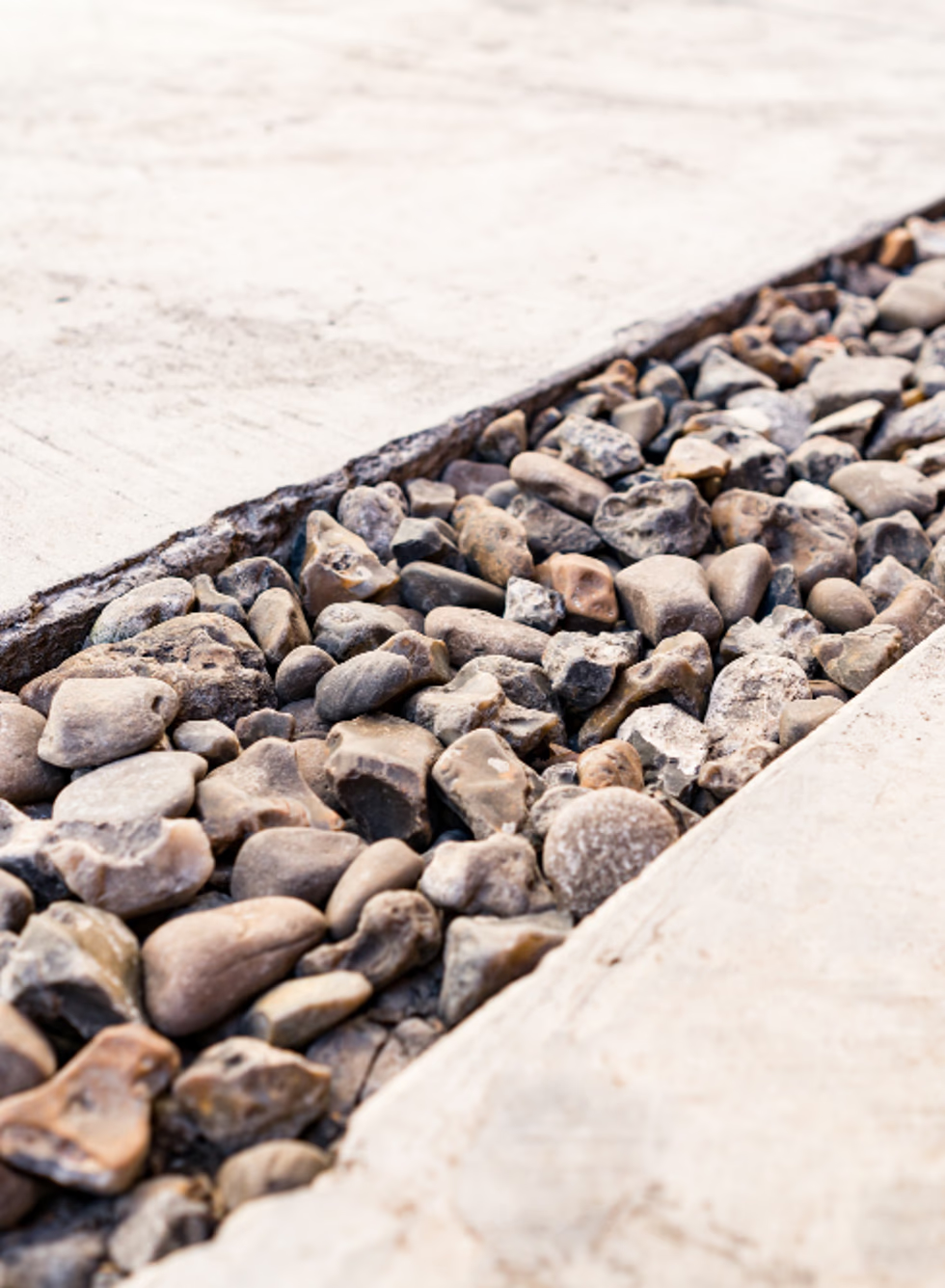
The surface rock is angular. Round pea gravel looks nice and drives like marbles. We use it for a path you walk, not for the drive you use every day.
The ground in Arlington
Arlington is a valley town, not a hillside suburb. Lots near the farmland and the trail are often open to the west wind and sit on clay that holds water. After a wet week the soil smears under a boot and the moss moves into any thin spot in the grass. Houses closer to the river have a second problem: the ground is low, so a downspout that just dumps at the foundation has nowhere useful to send the water.
We plan work around that. Drainage goes in before we talk about a patio or a new lawn. Native plantings that actually belong on this floodplain — vine maple, salmonberry, and other understory that can take wet feet — do better than a plant list copied from a drier lot. Gravel paths and low rock work fit the rural edges of town without pretending the soil is something it is not.
How we do the work
Gravel stays put when it has a compacted base, a fabric or a separation from the clay, a slight crown or a cross slope, and an edge. A load of rock dumped on the grass is a mud pit by spring. We dig out the soft soil, build the base, and top it with the rock you actually walk and drive on.
The top rock is not the same as the base rock. Base is angular and locks. The surface might be smaller crushed rock or a cleaner gravel, depending on whether this is a drive, a dog run, or a path.
What we look at first
- Cars, foot traffic, or both
- How soft the ground is in March
- Where the water crosses the drive today
- An edge against lawn or beds so the rock does not migrate
Fabric
Separation fabric keeps clay from pumping up. It is not weed magic, and it is not a substitute for digging out the mud. We lap it and we cover it. Sun-baked fabric at the edge means the gravel was spread too thin.
Edges and weeds
Steel, timber, or a paved border on a walking path. On a farm drive, the ditch is the edge. Weeds in gravel get pulled or treated early, before the root is a shrub. A thick, clean surface grows fewer of them than a dirty thin one.
Refresh
Gravel is maintenance. Every few years a drive needs rock added and graded back to crown. We would rather tell you that than sell a “permanent” gravel surface. Pavers are permanent. Gravel is a good, honest, recurring surface.
More from this crew
- Gravel installation across Snohomish County
- French drain installation in Arlington
- Fence installation in Arlington
- Hardscaping in Arlington
- Paver installation in Arlington
- Gravel installation in Marysville
- Gravel installation in Granite Falls
- Gravel installation in Stanwood
Sources for the climate and the water
- USDA plant hardiness map for choosing plants that can take a Snohomish County winter.
- EPA WaterSense on watering less once a lawn or a new planting is established.
- EPA Soak Up the Rain on keeping roof and yard water from becoming someone else’s problem.