.png&w=3840&q=75)
Monroe sits on the Skykomish, with the fairgrounds on the edge of town. River-bottom ground stays wet, and a yard built as if the water table were low will heave, puddle, or grow moss until someone deals with the water. Low yards collect silt, sticks, and a mat of leaves. Cleaning the high garden and ignoring the debris line at the bottom leaves the flood trash in place.
Snohomish County · ZIP 98272 · 2020 population 19,608
After the water, and before the fair traffic
We rake the silt and the sticks off the surfaces that matter, cut the broken wood, and haul it. We do not scrape the floodplain down to bare soil for looks. Plants that held the bank stay.
People also want the street face cleaned before guests and events. That is beds, edges, and a mow. We can do both. They are not the same pile of debris.
The ground in Monroe
We see two kinds of lots. In town, smaller yards with the usual compacted soil and a lawn that has to look fine for most of the year. Closer to the river and the low ground, soils that remember high water. Gravel and drains belong there. A finished bark bed in a spot that floods is mulch in the neighbor’s fence line by spring.
The fair is part of the calendar. People want yards cleaned up and hedges cut back before the traffic and the guests, and they want storm debris gone after the first big fall wind. Trees on these lots — including the old fruit trees — need pruning that opens them up, not a topping that makes them dangerous. Native plantings along the wet edges do the work a lawn cannot.
How we do the work
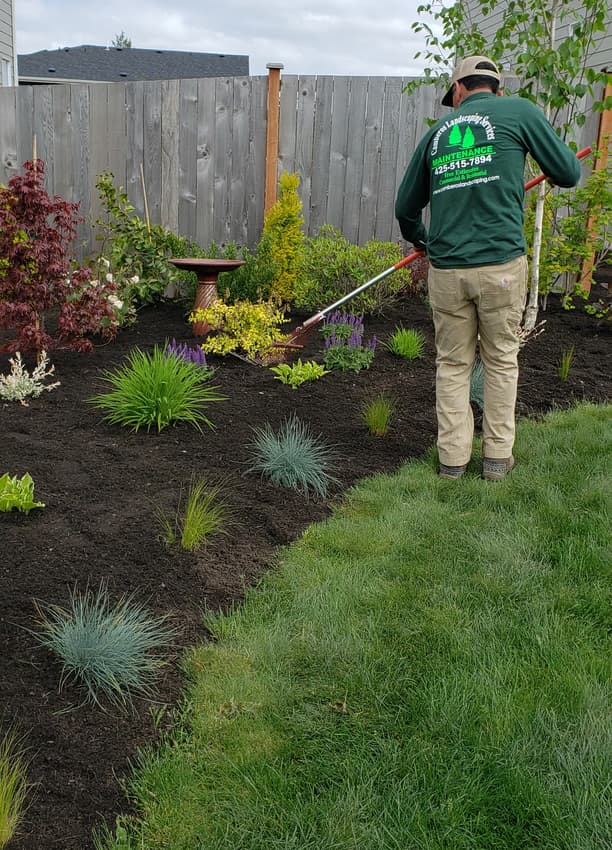
A cleanup is debris gone, beds redefined, and the hazards cut. We haul. A pile at the curb that sits for a month is not a finish. Brush, rotten wood, the fallen fence panel, the blackberries that took the side yard: that is the work.
We do not “clean” a yard by blowing leaves into the beds and covering them with a thin coat of bark. If bark is part of the visit, the bed is weeded first. If it is not in the bid, we do not fake it.
The walk-through is the scope. A bigger pile, a surprise blackberry thicket, or a tree that needs a climber changes the day, and we say that before we start rather than after the trailer is full.
What we look at first
- What is actually being hauled
- Blackberries, downed limbs, and junk versus a normal leaf drop
- Access for a trailer
- Whether you want it bare and ready, or just safe and tidy
Blackberries
Cut to the ground and hauled, with the understanding they return from the roots. A cleanup is not eradication. A follow-up, or a dig-out if the patch is small, is how you actually get rid of them. We will say which you bought.
Leaves
Off the lawn, off the beds you care about, off the walks. Into the trailer. A wooded corner can keep its duff. Blowing every leaf out of a natural area is busywork, and we will not pretend it is horticulture.
Ready for the next thing
A good cleanup ends with edges you can mow and beds you could bark. If the next step is renovation, we leave the yard ready for that instead of dressing it with mulch we are about to dig through.
More from this crew
- Yard cleanup across Snohomish County
- Tree and shrub pruning in Monroe
- Beauty bark in Monroe
- Landscaping in Monroe
- Pressure washing in Monroe
- Yard cleanup in Sultan
- Yard cleanup in Snohomish
- Yard cleanup in Gold Bar
Sources for the climate and the water
- USDA plant hardiness map for choosing plants that can take a Snohomish County winter.
- EPA WaterSense on watering less once a lawn or a new planting is established.
- EPA Soak Up the Rain on keeping roof and yard water from becoming someone else’s problem.