Monroe sits on the Skykomish, with the fairgrounds on the edge of town. River-bottom ground stays wet, and a yard built as if the water table were low will heave, puddle, or grow moss until someone deals with the water. Bark in the low ground floats and ends up in the fence. We mulch the beds by the house. The floodplain gets plants, not a load of mulch.
Snohomish County · ZIP 98272 · 2020 population 19,608
Bark above the flood stain
Upper beds are a normal job. We still keep the depth off the trunks of the old trees these yards have. Down at the river side, a bark bed is a donation to high water. We will not install it there to make a spring photo.
If you want the lower area to look kept, the tools are mowing, a gravel standing spot, and native plants. We will say that on the walk-through.
The ground in Monroe
We see two kinds of lots. In town, smaller yards with the usual compacted soil and a lawn that has to look fine for most of the year. Closer to the river and the low ground, soils that remember high water. Gravel and drains belong there. A finished bark bed in a spot that floods is mulch in the neighbor’s fence line by spring.
The fair is part of the calendar. People want yards cleaned up and hedges cut back before the traffic and the guests, and they want storm debris gone after the first big fall wind. Trees on these lots — including the old fruit trees — need pruning that opens them up, not a topping that makes them dangerous. Native plantings along the wet edges do the work a lawn cannot.
How we do the work
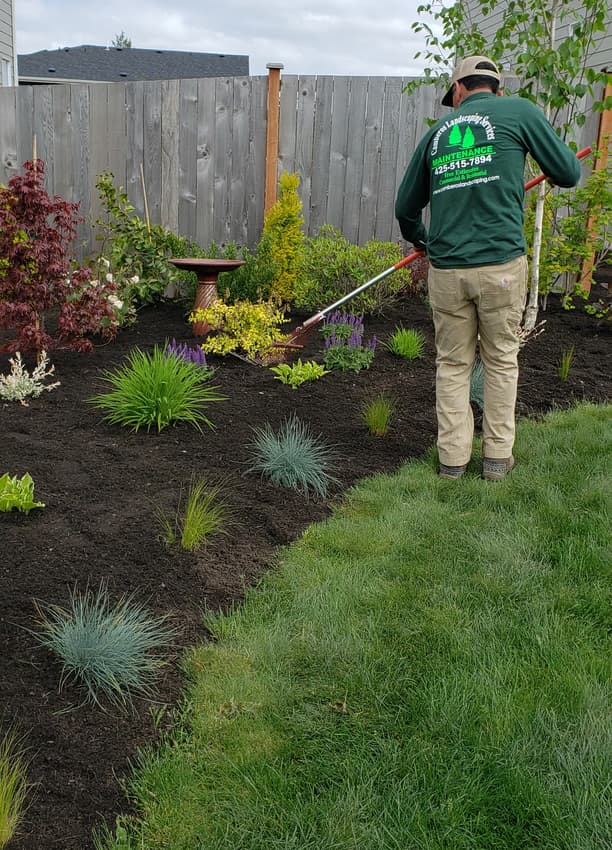
Bark is a blanket, not a cleanup. We pull the weeds and the old matted layer that has turned into soil, edge the bed so the bark has a place to stop, and put down enough depth to block light. A sprinkle that still shows dirt is not a bark job. It is a way to pay for the same weeds in June.
We keep bark off the crowns of shrubs and off the trunks of trees. A volcano of mulch against the bark of a tree is how the trunk rots. Two to three inches across the soil, pulled back at the stems.
What we look at first
- Whether the old bark has composted into a weed bed
- The edge against the lawn
- Plants that are buried already
- How far the truck can get the load
Color
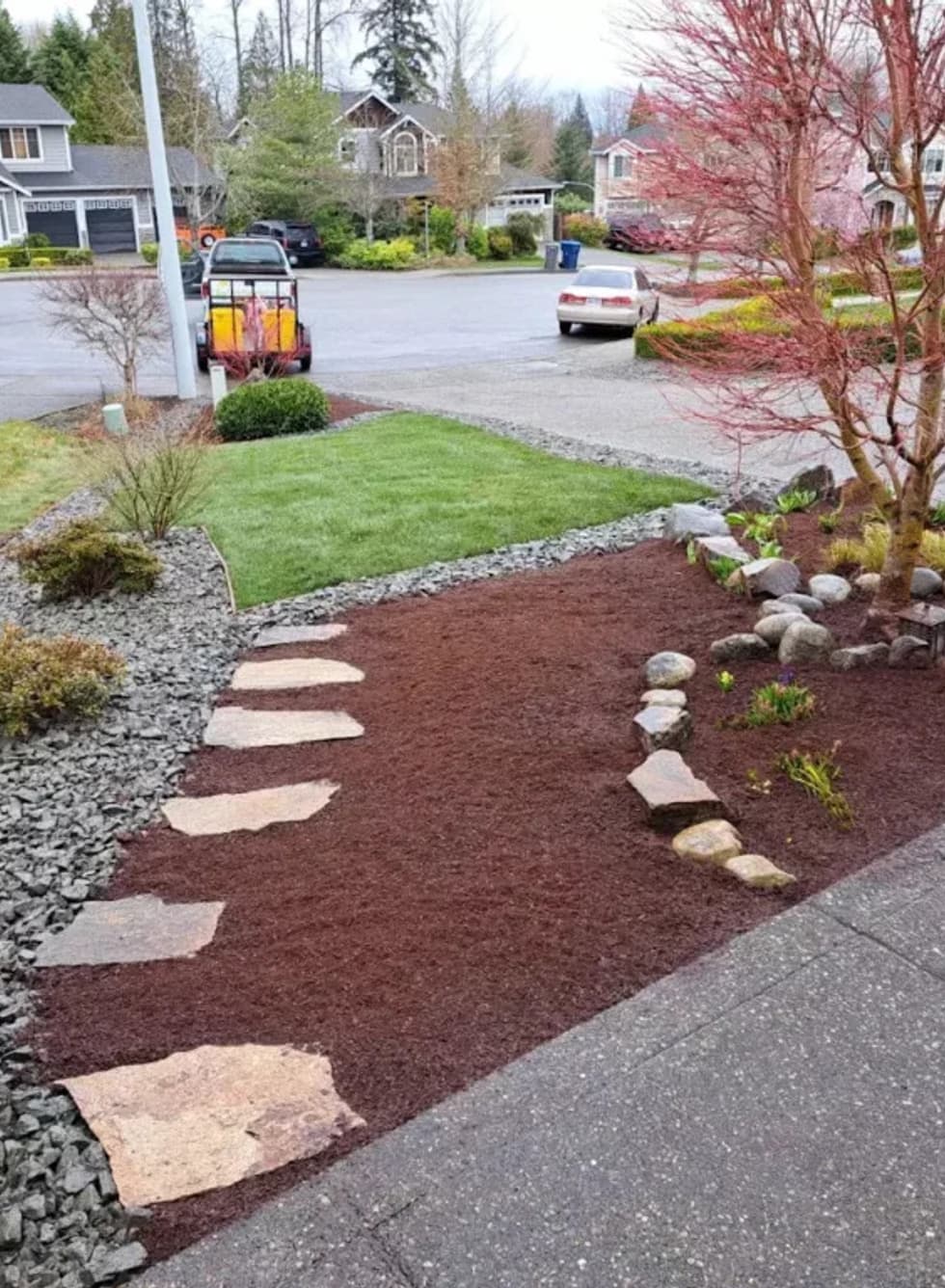
Natural bark fades to gray. That is normal. Dyed product holds a color and also stains concrete when it is fresh. We tell you which load you are getting. We do not promise the color in the photo will survive a winter.
How often
Top up every year or two, an inch or so, once the first depth is right. Starting over every spring means the first job was thin or the bed was never weeded. We would rather be on a light top-up.
Depth
About three inches after it settles, less against the stems, none against the trunk. One inch looks like a lot in the wheelbarrow and does nothing by July. We would rather do a smaller bed correctly.
More from this crew
- Beauty bark across Snohomish County
- Lawn weed control in Monroe
- Yard cleanup in Monroe
- Landscape design in Monroe
- Tree and shrub pruning in Monroe
- Beauty bark in Sultan
- Beauty bark in Snohomish
- Beauty bark in Gold Bar
Sources for the climate and the water
- USDA plant hardiness map for choosing plants that can take a Snohomish County winter.
- EPA WaterSense on watering less once a lawn or a new planting is established.
- EPA Soak Up the Rain on keeping roof and yard water from becoming someone else’s problem.