The Stillaguamish sits on the north edge of town, and a lot of the yards along the valley floor are old river ground: fertile when it drains, and a slick gray clay when it does not. Winter rain piles up against houses that back toward the Centennial Trail and the river parks, and the lawn stays soft long after the street looks dry. Damp, flat yards grow film on every surface that does not see afternoon sun. Washing without changing the shade means it returns. We still wash it, and we tell you the interval.
Snohomish County · ZIP 98223 · 2020 population 19,847
The north side and the patio that never dries
Concrete walks, the patio, and the foundation line are the usual work. We keep the wand moving and we do not etch a clean stripe down a walk by lingering. Dirty water gets pushed to a place that is not your front door.
A treatment after the wash is what keeps the green from being back at the first warm week. Pressure alone is a haircut.
The ground in Arlington
Arlington is a valley town, not a hillside suburb. Lots near the farmland and the trail are often open to the west wind and sit on clay that holds water. After a wet week the soil smears under a boot and the moss moves into any thin spot in the grass. Houses closer to the river have a second problem: the ground is low, so a downspout that just dumps at the foundation has nowhere useful to send the water.
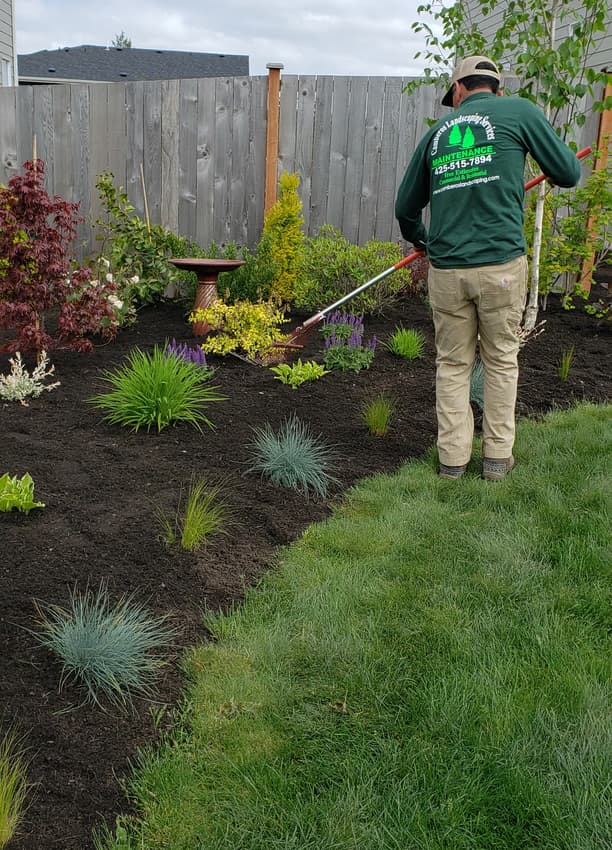
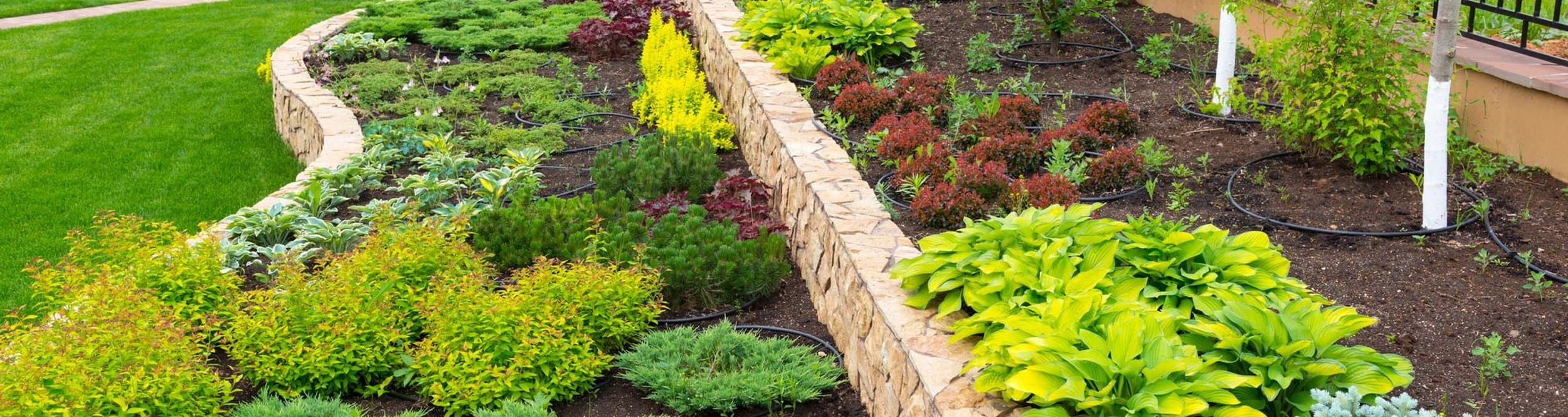
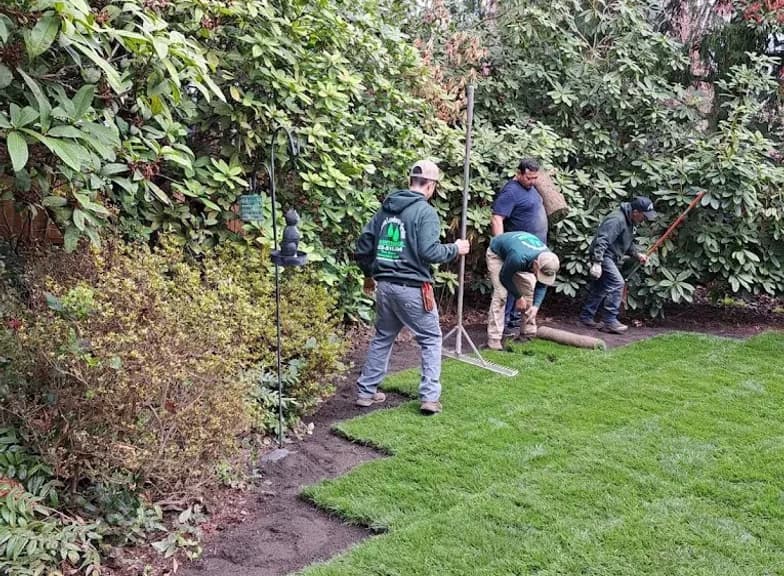
We plan work around that. Drainage goes in before we talk about a patio or a new lawn. Native plantings that actually belong on this floodplain — vine maple, salmonberry, and other understory that can take wet feet — do better than a plant list copied from a drier lot. Gravel paths and low rock work fit the rural edges of town without pretending the soil is something it is not.
How we do the work
Most of what people call pressure washing here is organic film: the black and green on the north side, the walks, the fence. The fix is the right tip, the right distance, and often a wash that kills the growth so it does not return in a month. A zero-degree tip on a soft wood deck is how you get a furred, ruined deck.
We do not drive water up under lap siding or into a vent to prove the washer is strong. High pressure is for concrete that can take it. Wood, paint, and mortar joints get a softer approach.
What we look at first
- What the surface is
- Where the water will run
- Plants and outlets we need to protect
- Whether the black is mildew that needs a treatment, not just a blast
Wood versus concrete
Concrete can take a stronger wash. Cedar decks, fences, and soft siding cannot. If we raise the grain, the surface holds more dirt afterward. We would rather leave it a shade less bright than furred.
What will not come out
Rust, deep oil, and etching that is already in the concrete. We can fade some of it. We will not promise a new slab. Paint that is loose will leave with the dirt, and you will see the bare spots. We point those out first if we can.
Treatment
A wash that kills the algae and mildew, applied and rinsed, is why the surface stays clean longer than a blast. We use it where the film is biological. We do not soak your vegetable bed in it. Plants get rinsed.
More from this crew
- Pressure washing across Snohomish County
- Patio installation in Arlington
- Paver installation in Arlington
- Fence installation in Arlington
- Yard cleanup in Arlington
- Pressure washing in Marysville
- Pressure washing in Granite Falls
- Pressure washing in Stanwood
Sources for the climate and the water
- USDA plant hardiness map for choosing plants that can take a Snohomish County winter.
- EPA WaterSense on watering less once a lawn or a new planting is established.
- EPA Soak Up the Rain on keeping roof and yard water from becoming someone else’s problem.