Monroe sits on the Skykomish, with the fairgrounds on the edge of town. River-bottom ground stays wet, and a yard built as if the water table were low will heave, puddle, or grow moss until someone deals with the water. A wall on the low ground can trap floodwater against the house or redirect it. We build walls on the bench. We do not dike the river for you.
Snohomish County · ZIP 98272 · 2020 population 19,608
Do not wall off the floodplain
Grade changes up by the house and the drive are normal retaining work: base, drain, a face that fits the house. Down where the river has been, we leave the flow path alone. Fill and a wall there is how you learn about the floodplain the expensive way.
If a small wall is only keeping a bed from slumping onto a path, we build that and we outlet the water to the side.
The ground in Monroe
We see two kinds of lots. In town, smaller yards with the usual compacted soil and a lawn that has to look fine for most of the year. Closer to the river and the low ground, soils that remember high water. Gravel and drains belong there. A finished bark bed in a spot that floods is mulch in the neighbor’s fence line by spring.
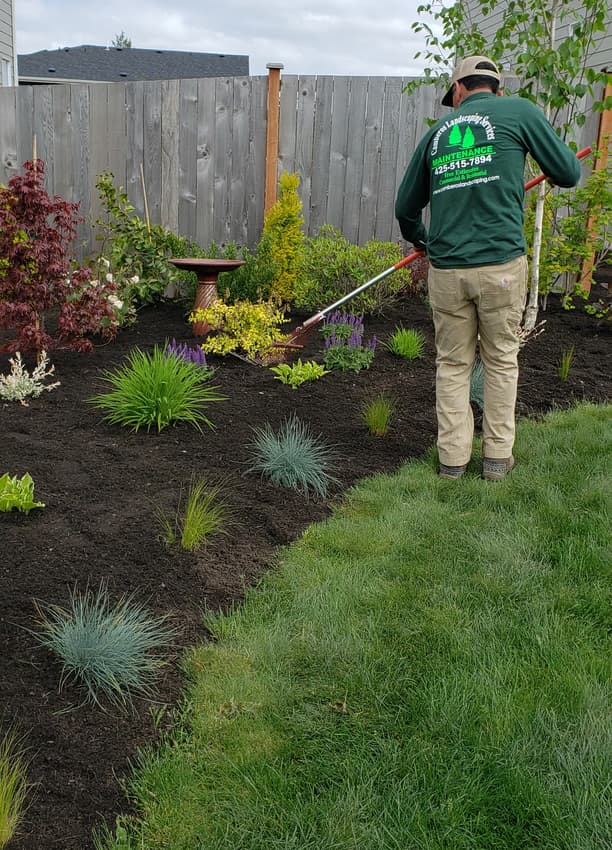
The fair is part of the calendar. People want yards cleaned up and hedges cut back before the traffic and the guests, and they want storm debris gone after the first big fall wind. Trees on these lots — including the old fruit trees — need pruning that opens them up, not a topping that makes them dangerous. Native plantings along the wet edges do the work a lawn cannot.
How we do the work
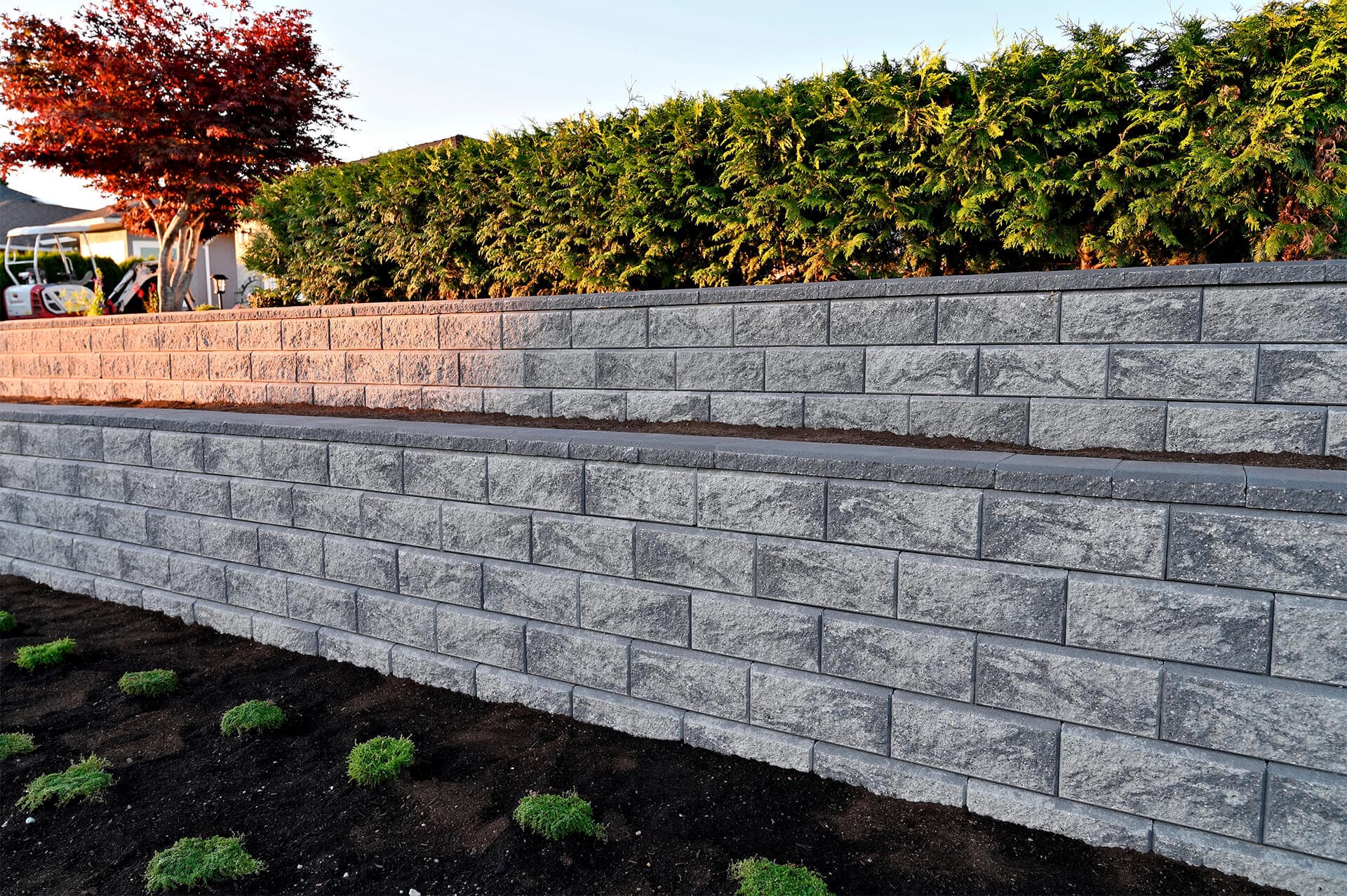
A retaining wall is a structure. The part you see is the block, the boulder, or the timber. The part that keeps it standing is the base, the batter or the geogrid, and the drain rock behind it. We do not stack block on the sod and call it a wall.
Height decides everything. A low garden wall and a wall holding a drive are not the same detail, the same permit, or the same price. We measure the retained dirt, not the face you wish it were.
What we look at first
- Retained height, at the tallest point
- What is above the wall: a lawn, a drive, a house
- Water coming down the slope
- Access for block or for boulders
Drainage is part of the wall
Rock behind the face, a pipe at the heel, and an outlet you can see. Weep holes alone, stuffed with the native clay, are not a drain. This is the step that gets skipped on walls that lean.
The base
Compacted rock, buried enough that the first course is not sitting in the organic layer. A wall is not a stack. If the base is soft, we dig out and replace it. There is no fabric or foam that fixes a bad base.
Block, rock, or timber
Engineered block is predictable and what we use when the height or the permit wants an engineered system. Boulders fit the foothills and the older yards. Timber is a short-life choice in the wet, and we will say how many years you are buying.
More from this crew
- Retaining walls across Snohomish County
- Rock walls in Monroe
- French drain installation in Monroe
- Hardscaping in Monroe
- Patio installation in Monroe
- Retaining walls in Sultan
- Retaining walls in Snohomish
- Retaining walls in Gold Bar
Sources for the climate and the water
- USDA plant hardiness map for choosing plants that can take a Snohomish County winter.
- EPA WaterSense on watering less once a lawn or a new planting is established.
- EPA Soak Up the Rain on keeping roof and yard water from becoming someone else’s problem.