Monroe sits on the Skykomish, with the fairgrounds on the edge of town. River-bottom ground stays wet, and a yard built as if the water table were low will heave, puddle, or grow moss until someone deals with the water. On low ground, gravel survives a high-water year better than pavers or bark. It will move. We build it so it can be pulled back, not so it washes into the channel.
Snohomish County · ZIP 98272 · 2020 population 19,608
Gravel that can flood and be raked back
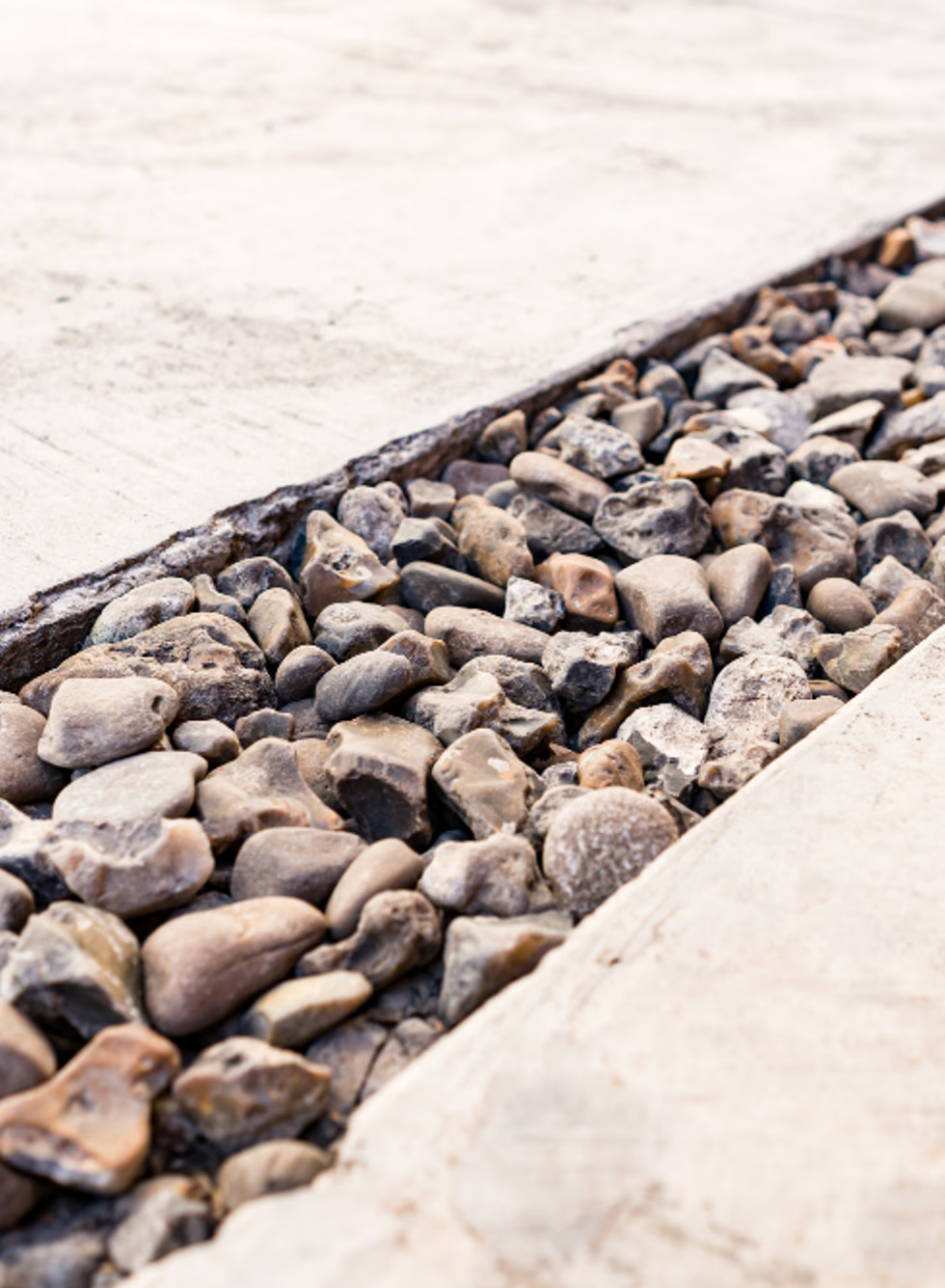
Up by the house, a normal compacted drive. Down on the bench that sees high water, a sacrificial surface: angular, not so fine that it becomes silt, and not placed where the river will take it downstream. We will not fill the floodway to “raise the drive” without telling you that is a bad idea.
Ditches stay open. A gravel drive that dams the ditch is a flooded shop.
The ground in Monroe
We see two kinds of lots. In town, smaller yards with the usual compacted soil and a lawn that has to look fine for most of the year. Closer to the river and the low ground, soils that remember high water. Gravel and drains belong there. A finished bark bed in a spot that floods is mulch in the neighbor’s fence line by spring.
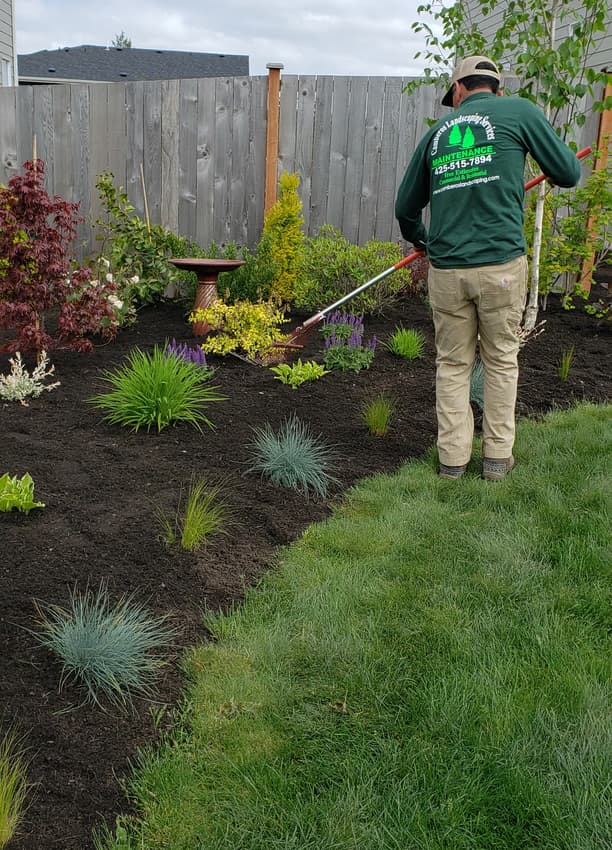
The fair is part of the calendar. People want yards cleaned up and hedges cut back before the traffic and the guests, and they want storm debris gone after the first big fall wind. Trees on these lots — including the old fruit trees — need pruning that opens them up, not a topping that makes them dangerous. Native plantings along the wet edges do the work a lawn cannot.
How we do the work
Gravel stays put when it has a compacted base, a fabric or a separation from the clay, a slight crown or a cross slope, and an edge. A load of rock dumped on the grass is a mud pit by spring. We dig out the soft soil, build the base, and top it with the rock you actually walk and drive on.
The top rock is not the same as the base rock. Base is angular and locks. The surface might be smaller crushed rock or a cleaner gravel, depending on whether this is a drive, a dog run, or a path.
What we look at first
- Cars, foot traffic, or both
- How soft the ground is in March
- Where the water crosses the drive today
- An edge against lawn or beds so the rock does not migrate
Fabric
Separation fabric keeps clay from pumping up. It is not weed magic, and it is not a substitute for digging out the mud. We lap it and we cover it. Sun-baked fabric at the edge means the gravel was spread too thin.
Edges and weeds
Steel, timber, or a paved border on a walking path. On a farm drive, the ditch is the edge. Weeds in gravel get pulled or treated early, before the root is a shrub. A thick, clean surface grows fewer of them than a dirty thin one.
Refresh
Gravel is maintenance. Every few years a drive needs rock added and graded back to crown. We would rather tell you that than sell a “permanent” gravel surface. Pavers are permanent. Gravel is a good, honest, recurring surface.
More from this crew
- Gravel installation across Snohomish County
- French drain installation in Monroe
- Fence installation in Monroe
- Hardscaping in Monroe
- Paver installation in Monroe
- Gravel installation in Sultan
- Gravel installation in Snohomish
- Gravel installation in Gold Bar
Sources for the climate and the water
- USDA plant hardiness map for choosing plants that can take a Snohomish County winter.
- EPA WaterSense on watering less once a lawn or a new planting is established.
- EPA Soak Up the Rain on keeping roof and yard water from becoming someone else’s problem.